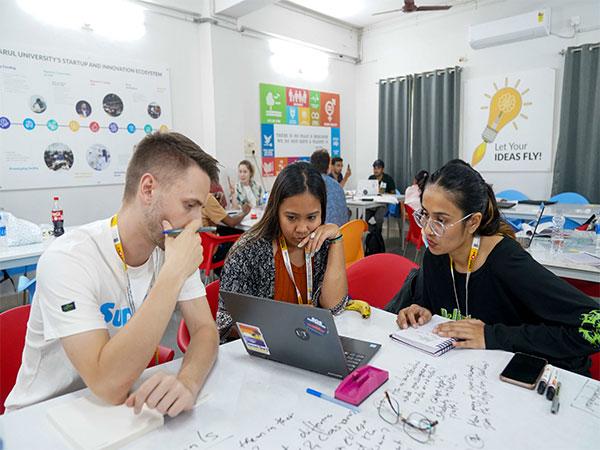
Choosing among the private universities in Delhi NCR for entrepreneurship is an important decision if you want to build a business while pursuing higher education. The right university should offer more than management classes. It should provide opportunities to develop business ideas, learn from experienced mentors, understand customers and explore startup incubation. Universities such as IILM University, Bennett University, Shiv Nadar University and Amity University have established entrepreneurship or innovation initiatives worth comparing before making your decision.
Quick Answer
Some private universities in Delhi NCR offer dedicated startup incubation centres, entrepreneurship cells, mentorship programmes and opportunities for practical business learning. IILM University has its Innovation Lab and student startup ecosystem, Bennett University has Bennett Hatchery, Shiv Nadar University has an Atal Incubation Centre, and Amity University has the Amity Innovation Incubator. The right choice depends on your preferred course, business interests, campus and the support available to students.
What Makes a University Good for Entrepreneurship?
A good university for entrepreneurship combines academic learning with opportunities to develop and test business ideas. Students should be able to understand how businesses work while gaining exposure to the challenges involved in launching a venture.
Starting a business requires more than creativity. You need to identify a market opportunity, understand customer requirements, prepare a business model, manage finances and develop a strategy to reach potential customers.
For example, imagine you want to launch an online clothing brand. Having attractive designs is only one part of the business. You also need to understand your target audience, sourcing costs, inventory management, pricing, digital marketing and customer retention.
This is where entrepreneurship education becomes useful.
When comparing universities, pay attention to the following opportunities:
Practical business learning: Look for projects involving market research, business planning, product development and customer discovery.
Startup incubation: An incubation centre can help students access guidance, infrastructure, networking and other resources for developing early-stage ventures.
Mentorship: Interaction with entrepreneurs, industry professionals and experienced business leaders can help students understand real business challenges.
Industry exposure: Business competitions, startup events, internships and live projects can connect classroom concepts with actual market requirements.
Interdisciplinary learning: A startup may require knowledge of technology, finance, marketing, design and operations. Opportunities to collaborate across academic disciplines can be valuable.
The quality of these opportunities matters more than simply having entrepreneurship mentioned in a university’s course brochure.
Private Universities in Delhi NCR for Entrepreneurship
Several private universities in Delhi NCR have established initiatives to support innovation and startup development. The following shortlist compares their publicly documented entrepreneurship facilities. It is not a ranking because the right institution depends on the student’s course preferences and business objectives.
IILM University, Gurugram and Greater Noida
IILM University is worth considering if you want to combine management education with entrepreneurship and practical business exposure.
At its Gurugram campus, the university has the IILM Innovation Lab, which operates as an incubation centre under the IILM Entrepreneurship Foundation. Its initiatives support students, faculty members and aspiring entrepreneurs in developing and validating business ideas.
The Innovation Lab provides access to infrastructure, prototyping facilities, mentorship and guidance on business model validation and market entry. Its documented network includes organisations such as FITT at IIT Delhi, DBS Bank, AIC Sonipat and other ecosystem partners.
The university also maintains a student startup portfolio featuring ventures in areas such as cybersecurity, healthcare technology, legal services, digital business solutions and business operations.
At the Greater Noida campus, the Entrepreneurship Cell encourages innovation through startup showcases, bootcamps, panel discussions and interdisciplinary activities.
Students interested in management education can also consider the university’s BBA and MBA pathways, including entrepreneurship-related learning opportunities.
For aspiring founders, the combination of academic learning, incubation initiatives and student venture examples makes IILM a relevant option to investigate.
Official resources:
University website
IILM Innovation Lab
Student startup portfolio
Bennett University, Greater Noida
Bennett University is another option for students interested in entrepreneurship, particularly those looking for structured incubation and startup development support.
Its Bennett Hatchery Foundation provides an entrepreneurship ecosystem for students, faculty members and early-stage innovators. The university describes the Hatchery as a platform for supporting ventures through physical and virtual incubation, mentoring, funding opportunities and industry connections.
Students can explore pre-incubation activities, ideation initiatives and innovation challenges before moving towards more structured venture development.
The university also highlights support through business mentors, domain specialists and industry professionals. Its startup ecosystem is relevant to students interested in understanding how an idea can progress towards market validation and early business growth.
This university may be worth considering if you want to explore startup development alongside studies in technology, engineering, management or other disciplines.
Official resource:
Bennett University Innovation Centre
Shiv Nadar University, Delhi NCR
Shiv Nadar University offers a different perspective on entrepreneurship through its Atal Incubation Centre.
Established in 2017 with support from the Atal Innovation Mission, NITI Aayog, the centre focuses on innovation and startup development. Its stated approach is technology agnostic, with a hardware-focused incubation environment.
The centre provides a platform for innovation-driven entrepreneurs to develop business ventures with access to technical assistance, business resources and an academic community.
Its incubation initiatives include pre-incubation and structured incubation support. These are relevant for students who want to explore technology-based ideas, product development and research-oriented ventures.
Students interested in hardware, engineering-led innovation or technology-based entrepreneurship may find this environment particularly relevant.
Official resource:
Atal Incubation Centre at Shiv Nadar University
Amity University, Noida
Amity University is another institution worth including when comparing universities for startup development in Delhi NCR.
Its Amity Innovation Incubator provides support for students and entrepreneurs interested in developing new business ideas. The incubator describes its support across different stages of the startup journey, including mentoring, business advisory, infrastructure and funding-related assistance.
The initiative also highlights its connections with industry professionals, venture capitalists and technical specialists.
For students who want to explore entrepreneurship in areas such as technology, product development and innovation, the incubation environment can provide exposure to the processes involved in building a business.
Students should check the current incubation eligibility, available programmes and campus-specific facilities before applying.
Official resource:
Amity Innovation Incubator
How Do These Universities Compare?
The four universities have different approaches to entrepreneurship. Comparing their documented initiatives can help you identify which environment is more relevant to your business interests.
| University | Entrepreneurship initiative | Main documented focus |
|---|---|---|
| IILM University | IILM Innovation Lab and Entrepreneurship Cell | Mentorship, venture development, idea validation and student startups |
| Bennett University | Bennett Hatchery | Physical and virtual incubation, mentoring and funding opportunities |
| Shiv Nadar University | Atal Incubation Centre | Technology-focused innovation, pre-incubation and startup incubation |
| Amity University | Amity Innovation Incubator | Business mentoring, incubation, infrastructure and funding support |
The comparison shows that each institution offers a different approach. IILM combines management education with a dedicated innovation ecosystem, Bennett highlights structured startup incubation, Shiv Nadar University has a technology-oriented incubation environment, and Amity provides a broader innovation incubation platform.
Before making a final choice, ask each university about current student eligibility, mentor availability, funding conditions, incubation duration and the number of ventures actively supported.
Which Entrepreneurship Courses Should You Consider?
The right entrepreneurship course should develop your understanding of business creation, management and innovation. Your choice should depend on whether you want to launch a new venture, manage a family business, join a startup or work in corporate innovation.
Here are some useful areas to consider.
Business Administration: A BBA can provide an understanding of management, marketing, finance, accounting, operations and business strategy. It can be a suitable starting point for students who want a broad business foundation.
Entrepreneurship and Innovation: These subjects focus on identifying business opportunities, developing business models, understanding customers and exploring new products or services.
Business Analytics: Understanding data can help founders evaluate customer behaviour, sales performance, pricing and market opportunities.
Financial Management: Students should learn budgeting, cash flow management, financial planning and the fundamentals of business funding.
Marketing Management: Marketing knowledge is important for identifying target customers, positioning a brand and developing customer acquisition strategies.
Family Business Management: Students interested in continuing or expanding an existing family enterprise may benefit from learning about governance, succession, professional management and business growth.
When evaluating entrepreneurship courses in Delhi NCR, examine the actual curriculum rather than relying only on the programme title.
For example, check whether students work on business plans, participate in startup challenges, undertake live projects or receive guidance from experienced mentors.
How Do Startup Incubation Centres Help Students?
Startup incubation centres help aspiring entrepreneurs move from an early business idea towards a more developed venture. Their support may include mentoring, infrastructure, business planning, networking and guidance on funding opportunities.
The process generally involves several stages.
Idea identification: Students identify a problem or market opportunity that could become the foundation of a business.
Market research: They study potential customers, competitors, industry trends and existing solutions.
Business model development: Students work out how the proposed business will create value, generate revenue and manage costs.
Product development: Depending on the idea, this may involve creating a prototype, website, application or sample product.
Mentorship: Experienced professionals can help students review their ideas, identify weaknesses and understand business challenges.
Market validation: Students gather feedback from potential customers and evaluate whether the proposed solution addresses a genuine need.
For example, a student planning to launch an online education platform could begin by identifying a specific learning problem, interviewing potential users, developing a basic platform and collecting feedback before investing in a larger product.
The Startup India initiative provides information about government-supported incubation schemes and the broader startup support ecosystem.
However, incubation does not guarantee funding or commercial success. Students should understand the selection criteria and support conditions of each programme.
How to Choose the Right University in 2027
The best university for your entrepreneurial goals is one that matches your academic interests and provides practical support you can genuinely access.
Before submitting an application, consider the following points.
Understand your business interests. Decide whether you are interested in technology, retail, consulting, digital services, finance, manufacturing or a family business. Different universities may have stronger relevance to different areas.
Review the course curriculum. Check whether the programme includes entrepreneurship, innovation, marketing, finance and business strategy.
Visit the incubation centre. Ask whether students can access the facilities, how the application process works and what kind of mentoring is available.
Speak with current students. Their experiences can help you understand whether startup events, business competitions and mentoring activities take place regularly.
Examine student ventures. Look at actual student and alumni businesses. Understand what they developed, which sectors they entered and what support they received.
Understand the financial commitment. Compare tuition fees, accommodation, additional charges and any financial support available for entrepreneurial projects.
Check university recognition. Verify the university’s recognition and the applicable approvals for your intended programme through official sources such as the University Grants Commission.
You should also ask whether startup incubation is available to all students or whether applicants must meet specific selection requirements.
A campus visit or admission counselling session can help you understand these details before making a decision.
Why Practical Exposure Matters for Future Entrepreneurs
Practical exposure helps students understand the difference between developing a business idea and operating a business. It allows them to experience customer research, teamwork, decision-making, financial planning and the challenges of bringing a product or service to market.
For example, a student working on a digital marketing startup may understand marketing concepts in class. However, working on an actual project introduces additional responsibilities such as preparing a proposal, setting a budget, understanding client requirements and measuring campaign performance.
The same principle applies to technology startups, retail businesses, consulting firms and family enterprises.
At IILM, students can explore entrepreneurship through its Innovation Lab and student venture initiatives. The university also publishes information about its entrepreneurship development centre, which discusses mentorship, business idea development and practical entrepreneurial exposure.
Students interested in continuing an existing family business can also explore family business development and next-generation leadership, which is a different but related entrepreneurial pathway.
The value of these opportunities depends on how actively students participate and how well they apply what they learn.
Conclusion
Choosing among the private universities in Delhi NCR for entrepreneurship requires more than comparing course names or university rankings. Look at the quality of startup incubation, mentorship, business projects, industry interaction and student venture opportunities.
IILM University, Bennett University, Shiv Nadar University and Amity University offer different entrepreneurship initiatives that students can compare according to their interests.
If you want to build a business while studying, focus on finding a university where you can learn business fundamentals, test ideas, receive guidance and develop practical skills. A well-informed choice can give you a stronger foundation for exploring entrepreneurship in 2027.
Frequently Asked Questions
1. Which private university in Delhi NCR is suitable for aspiring entrepreneurs?
The right university depends on your preferred course, business interests and access to startup support. Compare incubation facilities, mentorship, student ventures and practical learning opportunities before choosing.
2. Can I start a startup while pursuing a BBA?
Yes. You can work on a startup while pursuing a BBA, provided you manage your academic responsibilities. Entrepreneurship cells, business projects and incubation facilities may help you develop your idea alongside your studies.
3. What is the role of a university incubation centre?
A university incubation centre supports aspiring entrepreneurs through resources such as mentorship, workspace, business planning, networking and product development guidance. Some centres also connect eligible startups with funding opportunities.
4. Which skills are important for starting a business after graduation?
Important skills include financial planning, marketing, communication, leadership, customer research, problem-solving and business development. Technology and data analysis skills can also be useful depending on the industry.
5. Do universities provide financial support for student startups?
Some universities provide access to seed funding, grants, investor networks or funding guidance through their incubation programmes. Support is subject to eligibility, selection procedures and the availability of funds.