

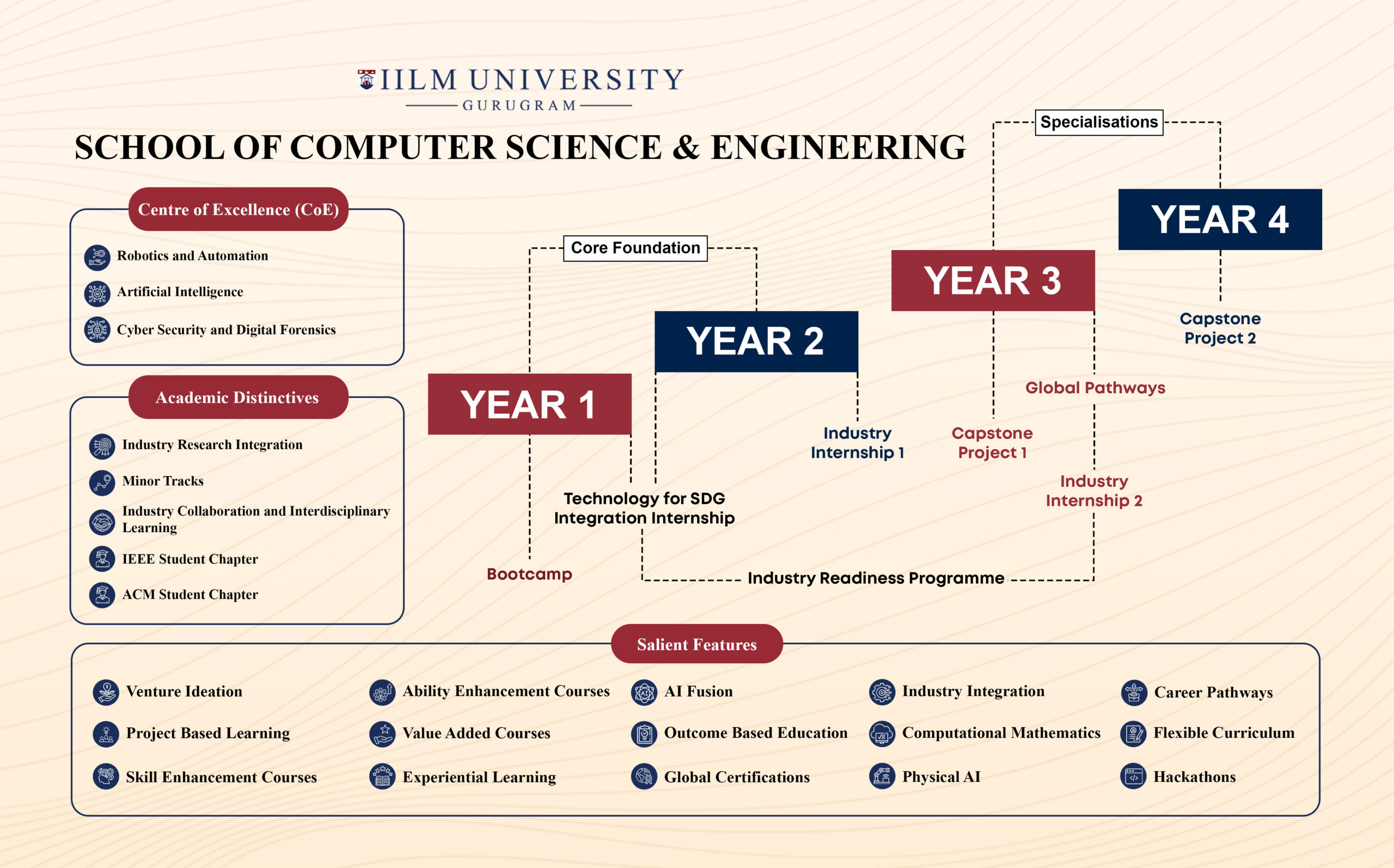
The B.Tech in Computer Science and Engineering program provides a strong foundation in computing principles, programming, and modern software development practices. The curriculum covers core areas such as data structures, algorithms, computer networks, operating systems, and database management systems. Students gain hands-on experience through laboratories, projects, and industry-oriented training. The program also introduces emerging technologies like artificial intelligence, cloud computing, cybersecurity, and data analytics. It prepares students for careers in software development, system design, research, and technology innovation. Industry collaborations and internships enhance practical exposure. Graduates are equipped with problem-solving and analytical skills to address real-world challenges in the digital era.
The B.Tech CSE Honours program is designed for academically strong students who wish to gain deeper knowledge in advanced computing domains. In addition to the core CSE curriculum, students study specialized subjects such as advanced algorithms, artificial intelligence, cybersecurity, and distributed systems. The program emphasizes innovation, problem-solving, and advanced technical skills. Students undertake advanced projects and research-oriented coursework. It encourages participation in hackathons, technical competitions, and innovation challenges. The program prepares students for leadership roles in the technology industry. Students need to achieve 15 more credits from the core CSE program to build strong foundation towards technical skills and project building.
The B.Tech CSE Research program is tailored for students interested in research and innovation in computer science. The curriculum integrates core computing knowledge with research methodology and advanced technologies. Students work closely with faculty mentors on research projects in areas such as AI, cybersecurity, IoT, and data science. The program encourages publication of research papers and participation in conferences. It develops analytical thinking, experimentation, and problem-solving abilities. Students gain exposure to research tools, methodologies, and innovation practices. The program prepares graduates for higher studies such as M.Tech, PhD, and careers in research and development. Students need to achieve 15 more credits from the core CSE program to build strong foundation towards research and innovation.
This programme offers students the opportunity to specialise in transformative fields such as AI-ML, Cloud Computing, Cyber Security, and more. With a NEP-compliant curriculum, state-of-the-art labs, and industry-aligned projects, it provides a robust platform for innovation and hands-on learning, preparing students to tackle real-world challenges and lead in emerging technologies.

Delivering quality education with a legacy of three decades.

A strong, supportive alumni community spread across the globe.

Partnering with renowned global institutions for a holistic education experience.

Connecting students with leading employers for rewarding careers.

Eco-friendly campuses situated in prime, accessible locations.

Recognising and rewarding academic excellence with financial support.

Learn from experts with rich academic and industry experience.

Experience an engaging and dynamic environment both inside and outside the classroom.

A curriculum designed to meet global standards of education and practice.
The B.Tech CSE with Specialisation programme is designed to provide students with core computing knowledge along with expertise in emerging technology domains. The program offers specialised tracks including Artificial Intelligence and Machine Learning, Robotics Intelligence, Generative AI, Cyber Security & Digital Forensics, Data Engineering, Data Science, Product Design, Cloud Computing, Full Stack Development, and Immersive Technologies. Students gain hands-on experience through advanced laboratories, industry projects, and practical training. The curriculum focuses on developing technical proficiency, innovation, and problem-solving abilities in specialised computing fields. Industry-relevant tools, frameworks, and platforms are integrated into the learning process. Students also benefit from internships, workshops, and collaborations with technology partners. The program prepares graduates for high-demand roles in modern technology industries. It also equips students with the skills required for entrepreneurship, research, and advanced studies in emerging computing domains.
| Specialisation | Description | Career Opportunities |
|---|---|---|
| Artificial Intelligence and Machine Learning | This specialisation focuses on building intelligent systems that can learn from data and make predictions. Students study machine learning algorithms, deep learning, natural language processing, and intelligent automation. The program emphasises real-world AI applications and hands-on model development. | AI Engineer, Machine Learning Engineer, AI Researcher, Data Scientist |
| Robotics Intelligence | This specialisation focuses on designing and programming intelligent robotic systems. Students learn robotics programming, embedded systems, sensors, actuators, and automation technologies used in industrial and service robots. | Robotics Engineer, Automation Engineer, Embedded Systems Developer, Robotics Programmer |
| Generative AI | This specialisation explores advanced AI models that generate text, images, audio, and other digital content. Students learn deep learning, transformer architectures, and large language models used in modern generative AI systems. | Generative AI Developer, AI Engineer, NLP Engineer, AI Research Scientist |
| Cyber Security & Digital Forensics | This specialisation focuses on protecting computer systems, networks, and data from cyber threats. Students gain knowledge in ethical hacking, network security, cyber threat intelligence, and digital forensic investigation techniques. | Cyber Security Analyst, Ethical Hacker, Digital Forensics Expert, Security Consultant |
| Data Engineering | This specialisation focuses on designing and managing large-scale data pipelines and data infrastructure. Students learn big data technologies, data processing frameworks, and cloud-based data management systems. | Data Engineer, Big Data Engineer, Data Architect, Analytics Engineer |
| Data Science | This specialisation focuses on extracting insights from data using statistical analysis, machine learning, and data visualisation techniques. Students work on predictive analytics and data-driven decision-making systems. | Data Scientist, Data Analyst, Business Intelligence Analyst, ML Engineer |
| Product Design | This specialisation focuses on designing innovative digital products with a strong user experience. Students learn UI/UX design, product development processes, and design thinking methodologies for creating user-centric technology solutions. | Product Designer, UI/UX Designer, Product Manager, Interaction Designer |
| Cloud Computing | This specialisation focuses on designing, deploying, and managing scalable cloud-based applications and services. Students gain hands-on experience with cloud infrastructure, virtualisation, and DevOps practices. | Cloud Engineer, DevOps Engineer, Cloud Architect, Cloud Solutions Engineer |
| Full Stack Web Development | This specialisation focuses on developing complete web applications, including both front-end and back-end technologies. Students learn modern frameworks, databases, APIs, and deployment practices for scalable web solutions. | Full Stack Developer, Web Developer, Software Engineer, Application Developer |
| Immersive Technologies | This specialisation focuses on emerging technologies such as Virtual Reality (VR), Augmented Reality (AR), and Mixed Reality (MR). Students develop immersive digital experiences for gaming, education, simulation, and industrial applications. | AR/VR Developer, XR Engineer, Game Developer, Immersive Experience Designer |
Develop the ability to formulate, analyse, and resolve computational challenges by leveraging a strong grasp of mathematical, scientific, and engineering principles, alongside contemporary computing methodologies.
Acquire expertise in utilising problem-solving techniques, algorithm design, and emerging technologies such as cloud computing, artificial intelligence, data science, and security for evaluating requirements, formulating technical specifications, and crafting solutions for diverse computing challenges.
Demonstrate technical proficiency in computer science, foster collaborative learning, and cultivate teamwork through interdisciplinary projects and professional engagements.
Equip graduates with a robust understanding, technical competence, and soft skills necessary to ethically address societal needs and drive sustainable progress in emerging computing domains through continuous learning and adaptation.
Academic Qualifications
We were privileged to learn from faculty members hailing from prestigious institutions such as IIM and FMS, alongside some of the finest professors at IILM. This strong academic foundation transformed into invaluable wisdom, shaping the path to where I am today.”
“As a proud gold medallist of my batch, I had the privilege of dedicating over a decade to Deloitte Consulting. My time at IILM was truly transformative, shaping both my career and personal growth. Returning to campus for the alumni meet was a nostalgic and heartwarming experience.”

“My MBA at IILM equipped me with essential business and corporate skills that helped me excel professionally. Case studies, group discussions, and grooming sessions with brilliant peers shaped me into a lifelong learner. Transitioning from a non-finance background to a finance enthusiast was possible due to IILM’s well-designed curriculum. Grateful to call IILM my Alma Mater!”

“IILM University’s MBA programme was truly transformative. The faculty’s real-world insights made learning highly practical and relevant. Personalised mentoring and career support aligned my goals with industry needs, while the vibrant campus life and networking opportunities enriched the experience. IILM equips you with the skills to thrive in the corporate world.”