

`This advanced programme delves into the frontier of Generative AI, empowering students to develop AI models capable of creating innovative content. With a focus on deep learning, generative adversarial networks, and applications in creative industries, this programme prepares students to lead the next wave of AI-driven innovation.

Delivering quality education with a legacy of three decades.

A strong, supportive alumni community spread across the globe.

Partnering with renowned global institutions for a holistic education experience.

Connecting students with leading employers for rewarding careers.

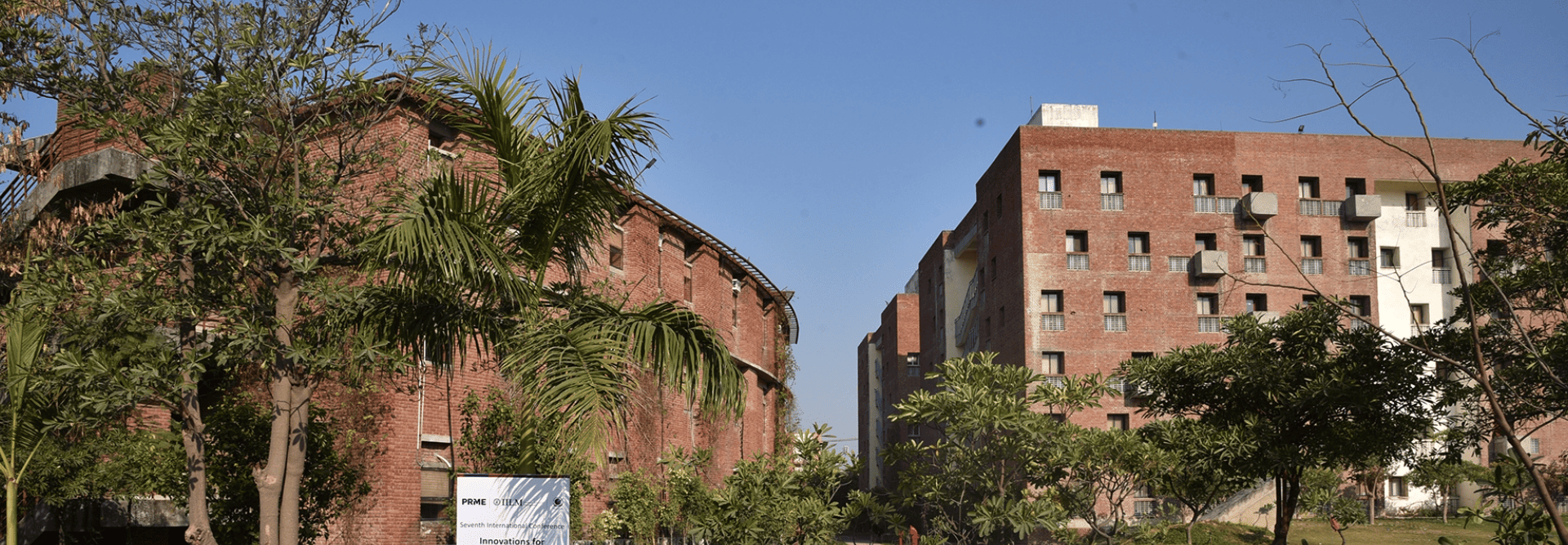
Eco-friendly campuses situated in prime, accessible locations.

Recognising and rewarding academic excellence with financial support.

Learn from experts with rich academic and industry experience.

Experience an engaging and dynamic environment both inside and outside the classroom.

A curriculum designed to meet global standards of education and practice.
Develop the skills to solve complex computational challenges in Generative AI, using mathematical, scientific, and computational principles effectively.
Master problem-solving techniques, algorithm design, and emerging technologies like neural networks and deep learning for crafting solutions in Generative AI.
Showcase technical proficiency in Generative AI through interdisciplinary projects, collaborative learning, and engagement with industry professionals.
Academic Qualifications
| Major Subjects | Description | Career Opportunities |
|---|---|---|
| Optimization Algorithms | This subject focuses on mathematical and computational techniques used to find optimal solutions for complex problems. Students learn optimisation methods used in machine learning models, deep learning training, and large-scale AI systems. | AI Engineer, Optimisation Specialist, ML Researcher |
| Statistics and Exploratory Data Analytics | This subject introduces statistical methods and exploration techniques for analysing and understanding data. Students learn data visualization, probability distributions, hypothesis testing, and statistical modeling for data-driven decision-making. | Data Scientist, Data Analyst, Business Intelligence Analyst |
| Applied Machine Learning | This course focuses on the practical implementation of machine learning algorithms for real-world applications. Students learn model training, evaluation techniques, feature engineering, and deployment of machine learning solutions. | Machine Learning Engineer, AI Developer, Data Scientist |
| Neural Networks & Deep Learning | This subject focuses on advanced neural network architectures and deep learning models used in AI systems. Students study convolutional neural networks, recurrent networks, and transformer-based models for complex data processing. | Deep Learning Engineer, AI Researcher, Computer Vision Engineer |
| MLOps for Generative-AI | This course focuses on managing the lifecycle of AI and generative AI models. Students learn model deployment, monitoring, automation pipelines, and scalable AI infrastructure using modern MLOps practices. | MLOps Engineer, AI Platform Engineer, ML Infrastructure Engineer |
| Generative AI | This subject focuses on advanced AI models capable of generating text, images, audio, and other content. Students learn transformer architectures, large language models, and generative techniques used in modern AI applications. | Generative AI Engineer, AI Research Scientist, NLP Engineer |
Find answers to common questions about the M.Tech in CSE with Specialisation in Generative AI at IILM University Gurugram.
We were privileged to learn from faculty members hailing from prestigious institutions such as IIM and FMS, alongside some of the finest professors at IILM. This strong academic foundation transformed into invaluable wisdom, shaping the path to where I am today.”

“As a proud gold medallist of my batch, I had the privilege of dedicating over a decade to Deloitte Consulting. My time at IILM was truly transformative, shaping both my career and personal growth. Returning to campus for the alumni meet was a nostalgic and heartwarming experience.”

“My MBA at IILM equipped me with essential business and corporate skills that helped me excel professionally. Case studies, group discussions, and grooming sessions with brilliant peers shaped me into a lifelong learner. Transitioning from a non-finance background to a finance enthusiast was possible due to IILM’s well-designed curriculum. Grateful to call IILM my Alma Mater!”

“IILM University’s MBA programme was truly transformative. The faculty’s real-world insights made learning highly practical and relevant. Personalised mentoring and career support aligned my goals with industry needs, while the vibrant campus life and networking opportunities enriched the experience. IILM equips you with the skills to thrive in the corporate world.”