



Academic Forum 2026 — Session on “Brainstorming for Initiating Design Thinking Centre”
06 March 2026, Friday
06 March 2026, Friday
11:00 AM
12:00 PM
School of Law, IILM University, Gurugram Organised By: Centre for Faculty Research & Development
Dr. Monika Bhatia & Dr. Misha Bahmani Speaker: Dr. Kuhu Tiwari
IILM University, Gurugram
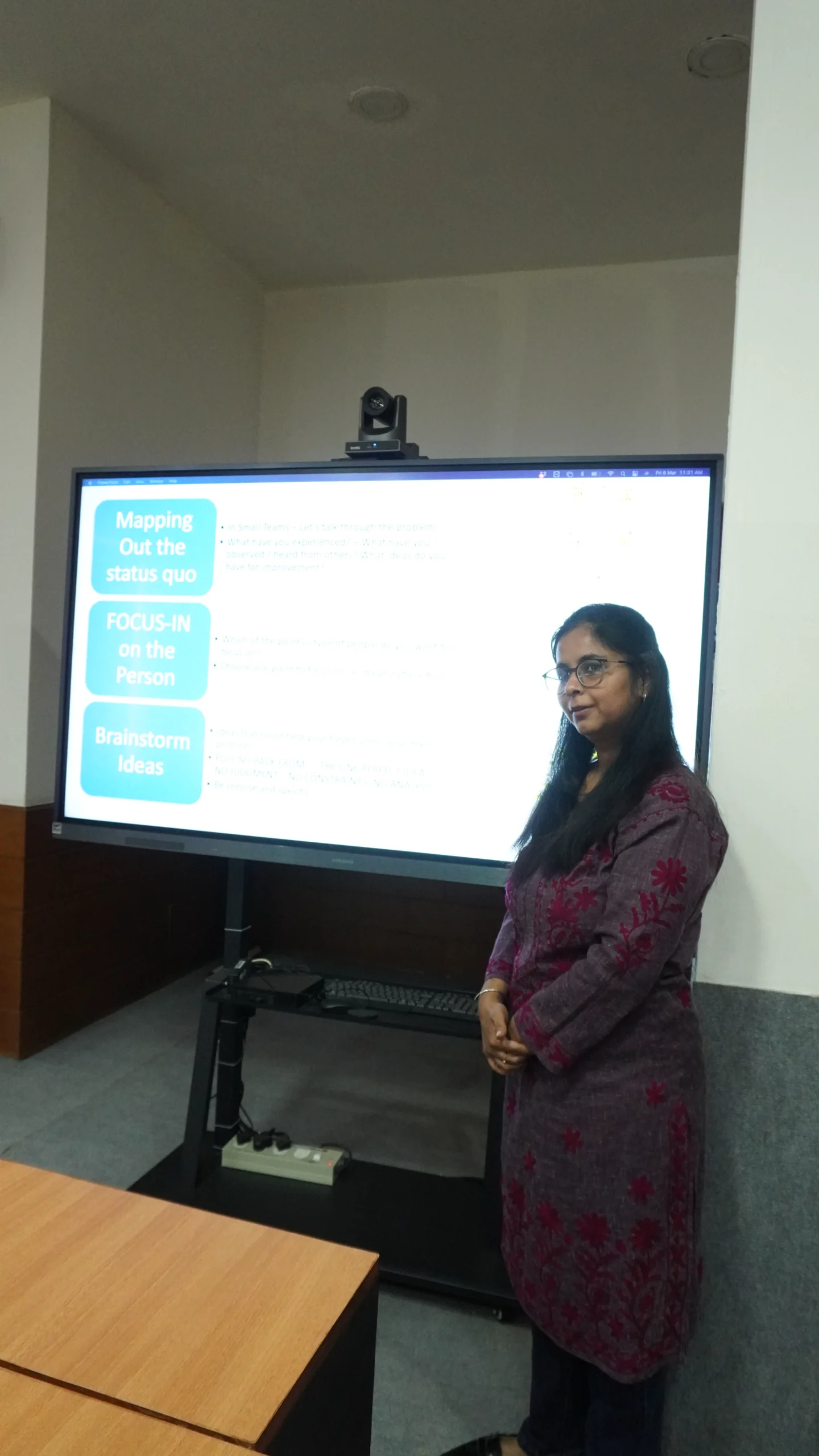


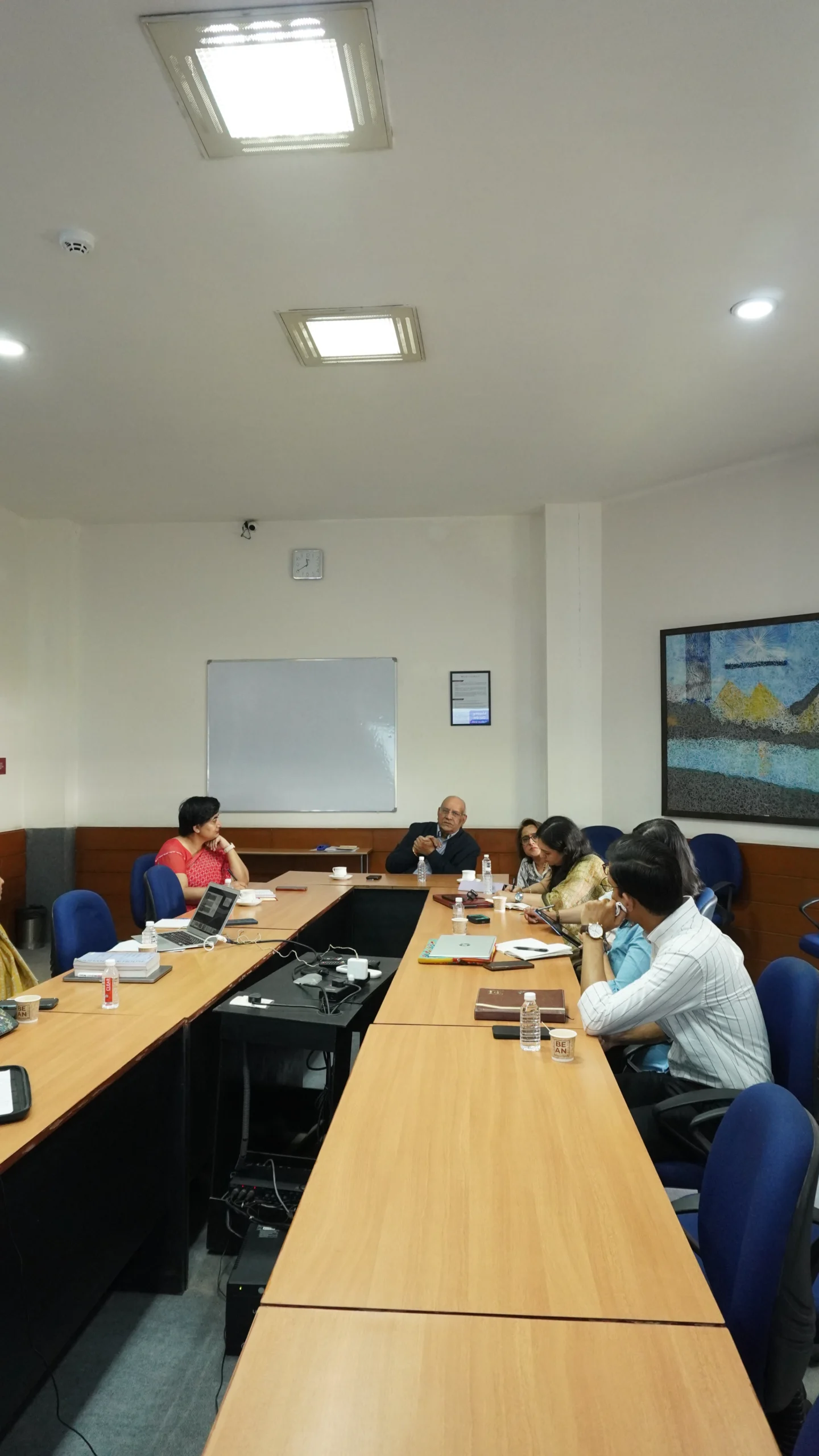



The Academic Forum 2026 session on “Brainstorming for Initiating Design Thinking Centre,” conducted on 6th March 2026 from 11:00 AM to 12:00 PM in the Board Room, 3rd Floor, Main Building, represented a significant institutional initiative by the Centre for Faculty Research & Development to explore the establishment of a dedicated Design Thinking Lab within IILM School of Law — convening faculty members for a structured brainstorming exercise to define the pedagogical, operational, and structural requirements of such a centre.
Delivered by Dr. Kuhu Tiwari, the session articulated a vision of legal education that moves beyond the conventional lawyer-centric perspective to incorporate client-centric thinking — arguing that legal professionals and students should develop the ability to understand and address real-world legal problems from the standpoint of those they serve, a shift that Design Thinking as a methodology is specifically designed to facilitate.
The session established that the successful establishment of a Design Thinking Lab within a law school requires three foundational pillars: active pedagogical integration, well-defined assessment criteria, and the inclusion of legal aid initiatives — positioning the proposed centre not merely as a physical space but as a curricular and institutional commitment to innovation-oriented legal education.
Dr. Kuhu Tiwari emphasised the importance of engaging academicians in a continuous process of discovery, synthesis, building, testing, and evolving ideas — a cyclical approach to institutional problem-solving that mirrors the iterative nature of Design Thinking itself and enables faculty to transform innovative concepts into practical and meaningful outcomes for students and the wider institution.
The session highlighted that incorporating Design Thinking into legal education requires law schools to move beyond traditional teaching methods by adopting process-oriented thinking that prioritises understanding the needs and requirements of individuals — underscoring the dual significance of Design Thinking both as a pedagogical tool for legal education reform and as a framework for institutional modernisation.
Note: This was exclusively a faculty development programme. No student participants are recorded. The following points reflect faculty takeaways as documented.
Faculty members gained a foundational understanding of why Design Thinking is particularly valuable within the context of legal education — specifically its capacity to shift the orientation of legal professionals from a purely lawyer-centric perspective to a client-centred, problem-solving approach that is better suited to addressing real-world legal challenges.
Participants were equipped with practical insights into the requirements for establishing a Design Thinking Lab within the institution, including the need for pedagogical integration, structured assessment, and legal aid initiatives — enabling them to contribute meaningfully to the institutional planning process for the proposed centre.
The session introduced faculty members to the iterative methodology of Design Thinking — encompassing discovery, synthesis, building, testing, and evolving — as a model applicable not only to student learning but also to faculty-led research and institutional innovation, broadening their understanding of how structured creative processes can drive academic advancement.
Faculty members developed appreciation for the importance of brainstorming activities as a structured mechanism for generating innovative ideas and solutions within academic institutions, reinforcing collaborative and creative engagement as a core element of institutional development and curriculum reform.
The session successfully underscored the distinction and significance of Design Thinking as a structured, client-centred approach that can contribute to more innovative problem-solving and meaningful outcomes in legal education — motivating faculty members to explore its practical incorporation into pedagogy, research, and institutional practices.