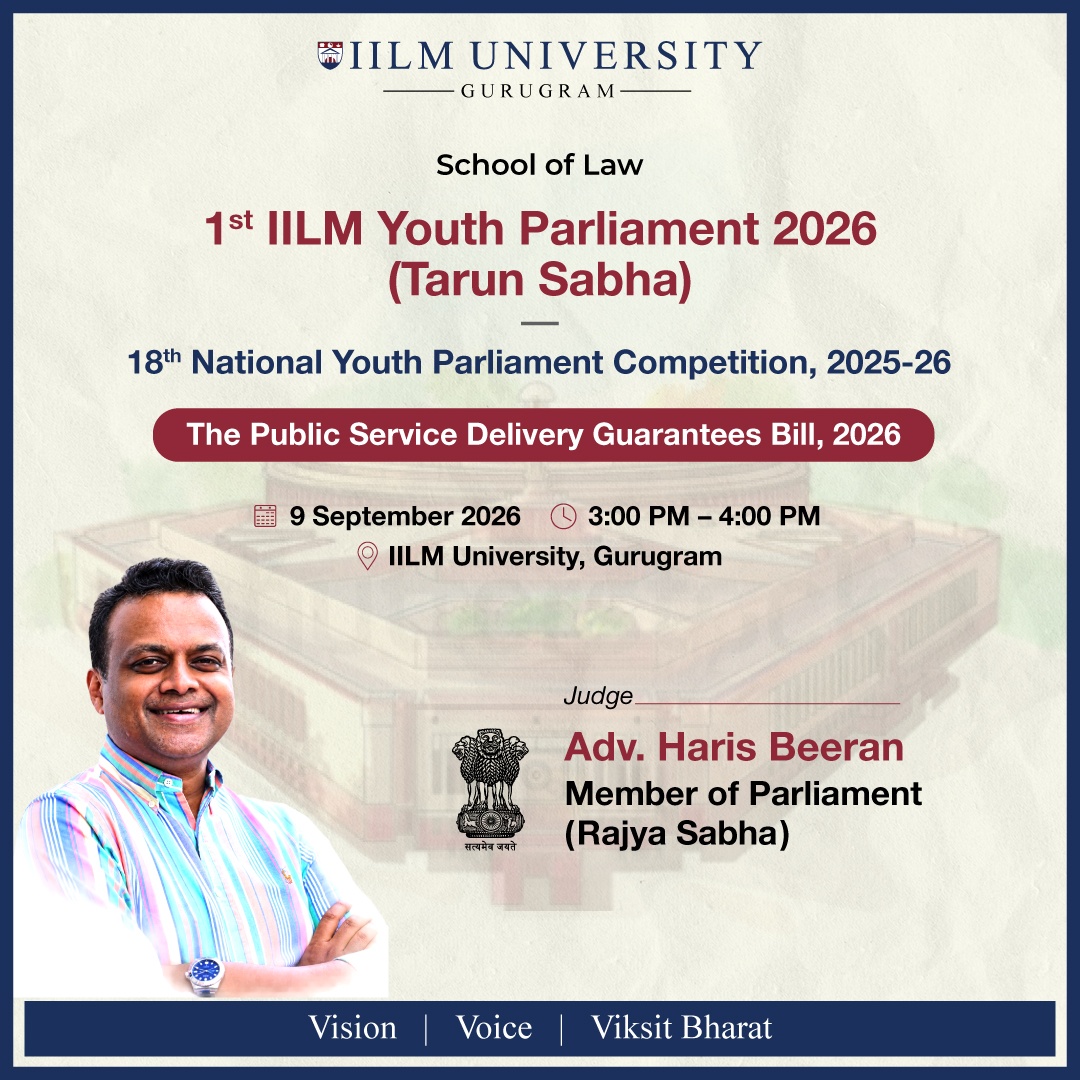
1st IILM Youth Parliament 2026

09 September 2026 School of Law

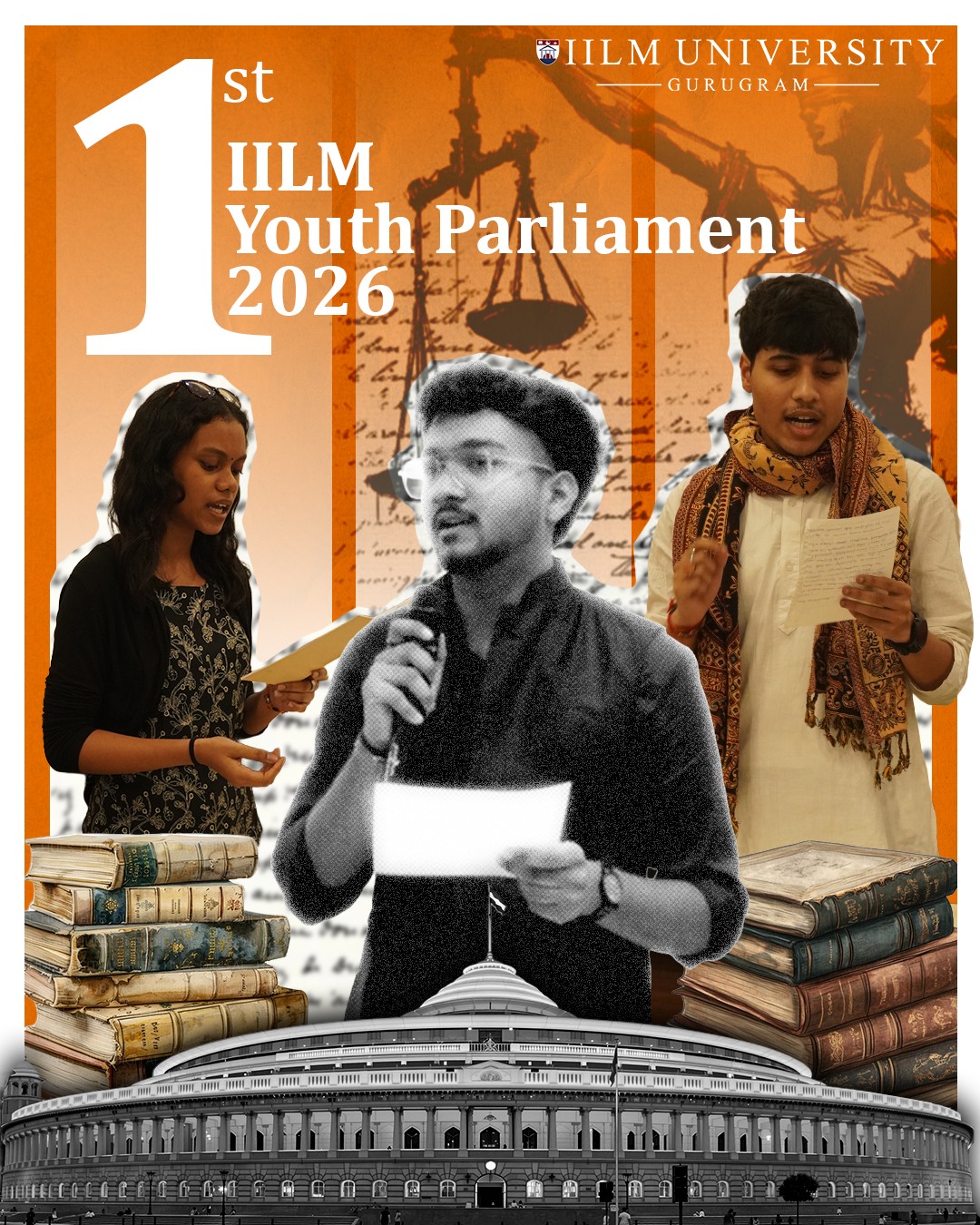
1st IILM Youth Parliament 2026

09 September 2026, Wednesday

09 September 2026, Wednesday

03:00 PM

04:00 PM

School of Law

IILM University Gurugram

IILM University Campus
What Happened

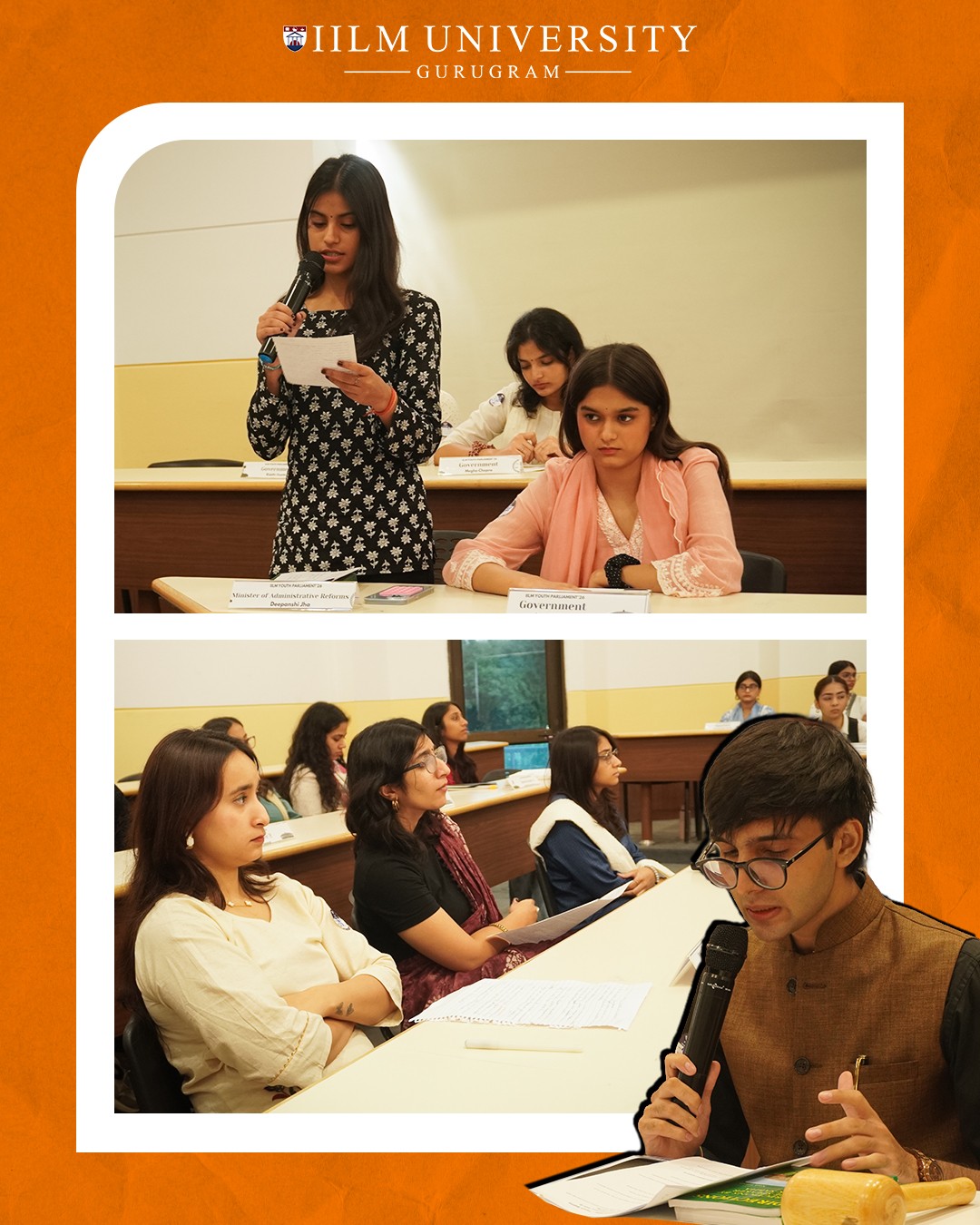
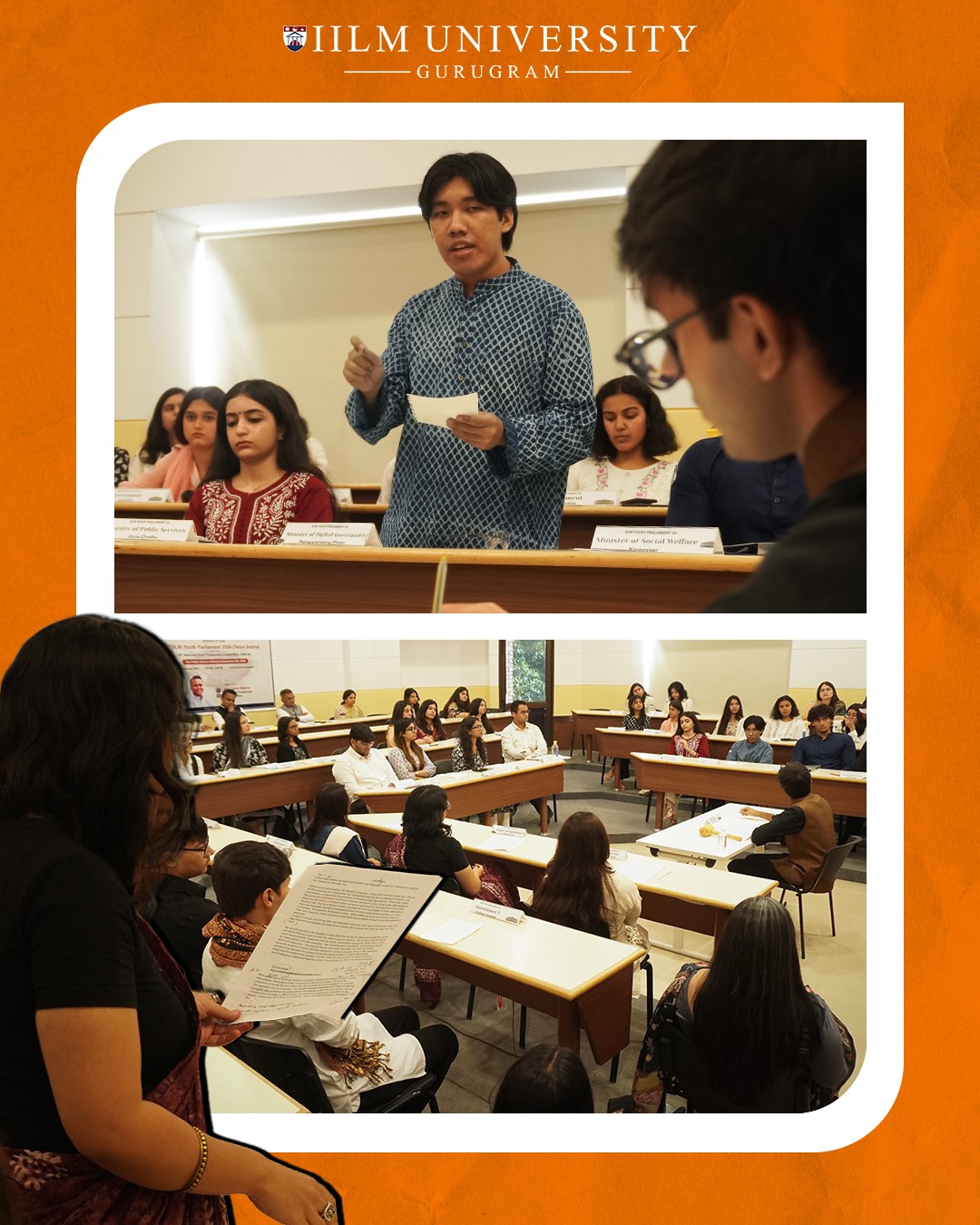
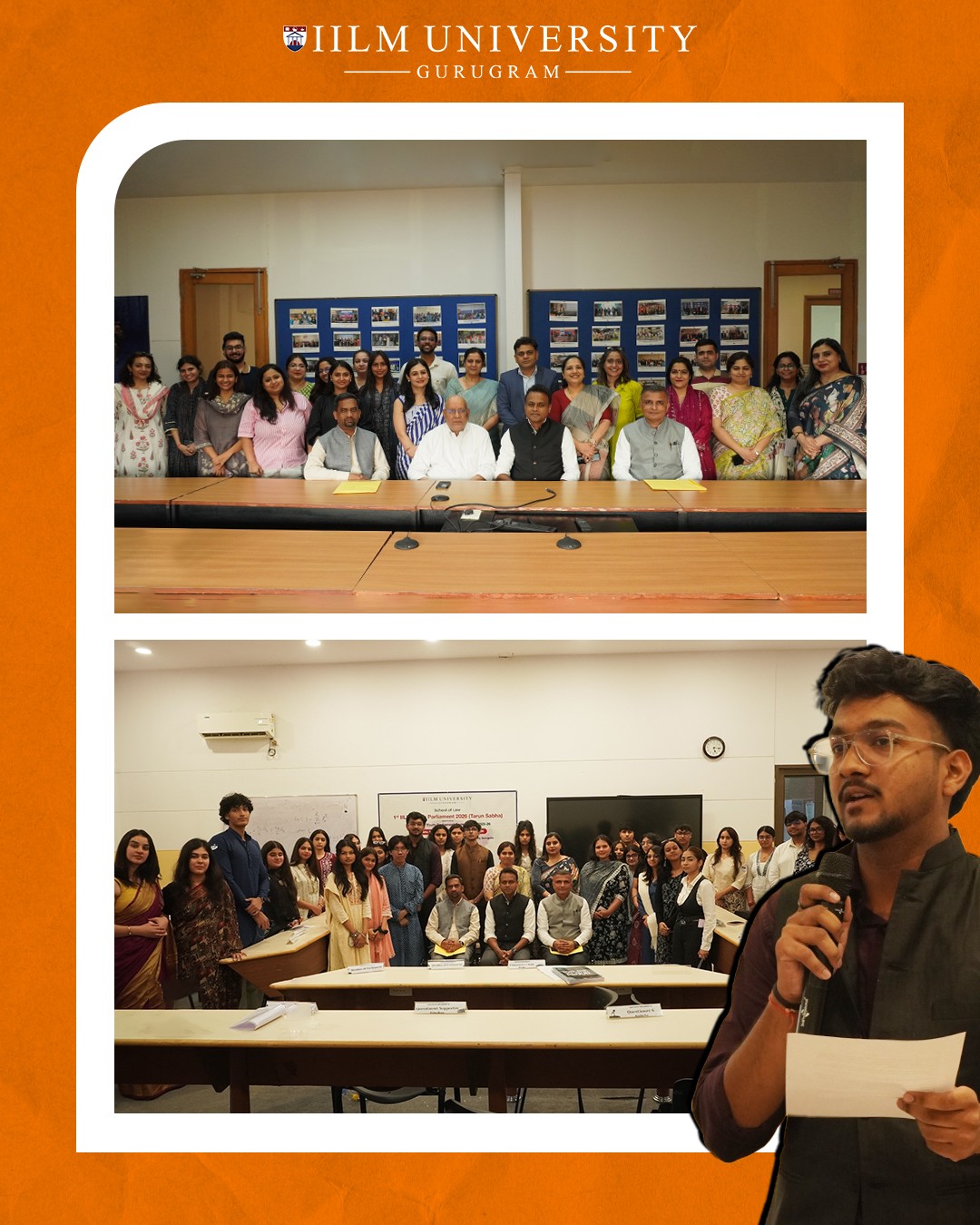
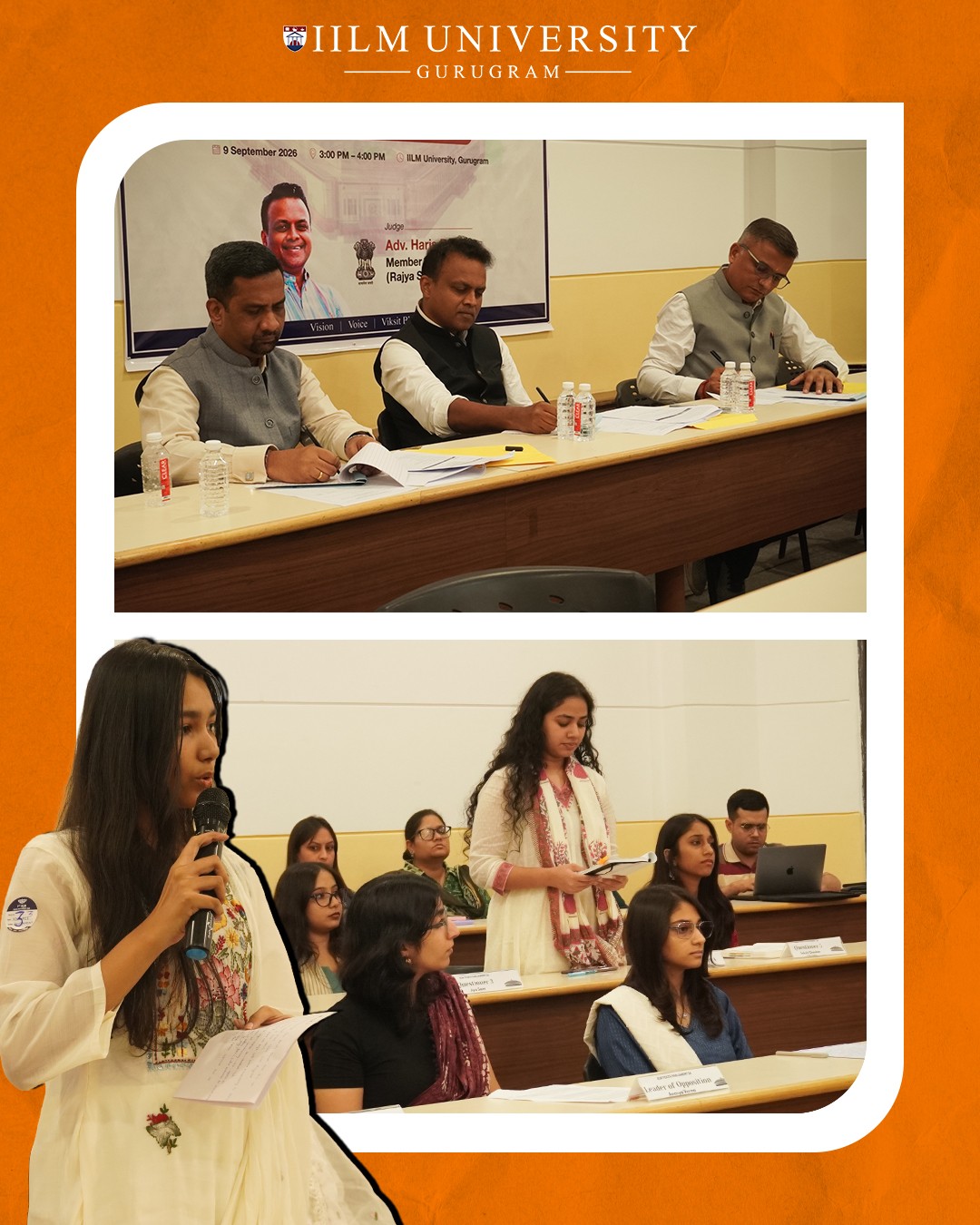
The School of Law, IILM University, Gurugram, hosted the 1st IILM Youth Parliament 2026 (Tarun Sabha) on 9 September 2026, as part of the 18th National Youth Parliament Competition 2025–26. The 55-minute sitting, held at the School of Law, brought together 38 student-members functioning as one House to deliberate the “Public Service Delivery Guarantees Bill, 2026.” The session opened with a 20-minute Question Hour, followed by introduction of the Bill, General Debate, Committee proceedings, amendments, clause-by-clause consideration, and passage — with Government and Opposition examining issues like citizen entitlement, accountability, federalism, digital exclusion, and implementation costs. The event was judged by Adv. Haris Beeran (Member of Parliament, Rajya Sabha), Prof. P. Puneeth (JNU), and Dr. B. N. Patel (Kamdhenu University; Ministry of Parliamentary Affairs), with awards presented to Ananya Verma, Thangsawmsang Phaipi, Diya Anand, Tanmay Goel, Sadaf Khan, and Vaishnavi Sharma.

Top Insights

  • Students didn’t just discuss the Bill in theory — they ran a full legislative cycle (Question Hour, debate, Committee stage, amendments, passage), giving them practical exposure to how Parliament actually functions.
  • The judging panel combined a sitting MP with academic and administrative experts, giving students direct feedback from people who work in or study parliamentary process professionally.
  • The Opposition’s role was specifically framed as constructive scrutiny rather than blanket disagreement, pushing students toward more substantive legislative debate than a typical mock exercise.

Student Takeaways

  • Running an actual legislative process — from Question Hour to passage — gave students a far more concrete sense of parliamentary democracy than classroom learning on the subject typically allows.
  • Engaging with opposing viewpoints in real time, and adapting arguments within procedural rules, built public speaking, critical reasoning, and listening skills under real debate conditions.
  • The judges’ feedback gave participants specific, actionable areas to improve on for future rounds, rather than just general appreciation — several student-members are now recognised award winners heading into further stages of the competition.
×