


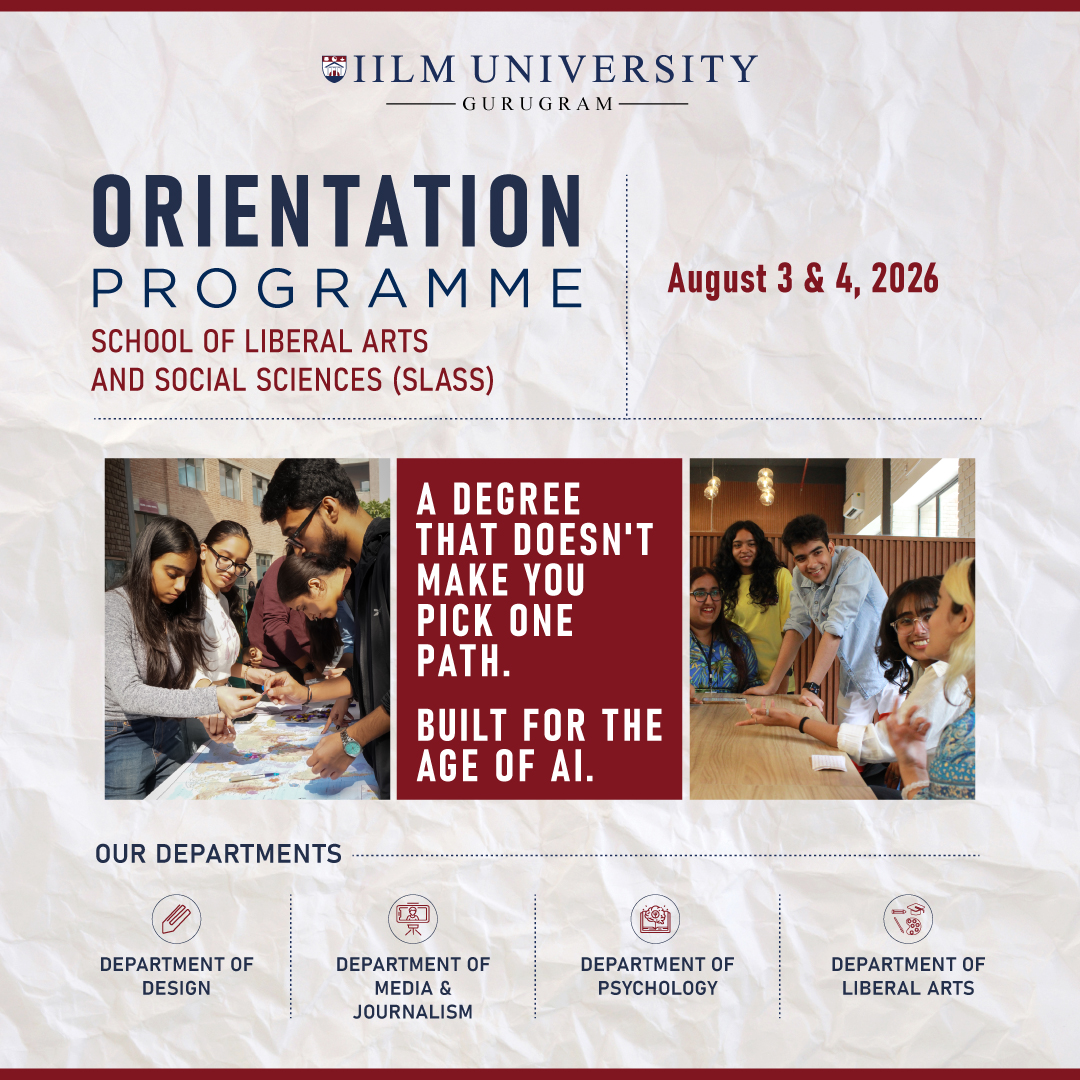
Orientation Programme – School of Liberal Arts and Social Sciences
03 August 2026, Monday
04 August 2026, Tuesday
09:00 AM
05:00 PM
School of Liberal Arts and Social Sciences
IILM University Gurugram
IILM University, Auditorium
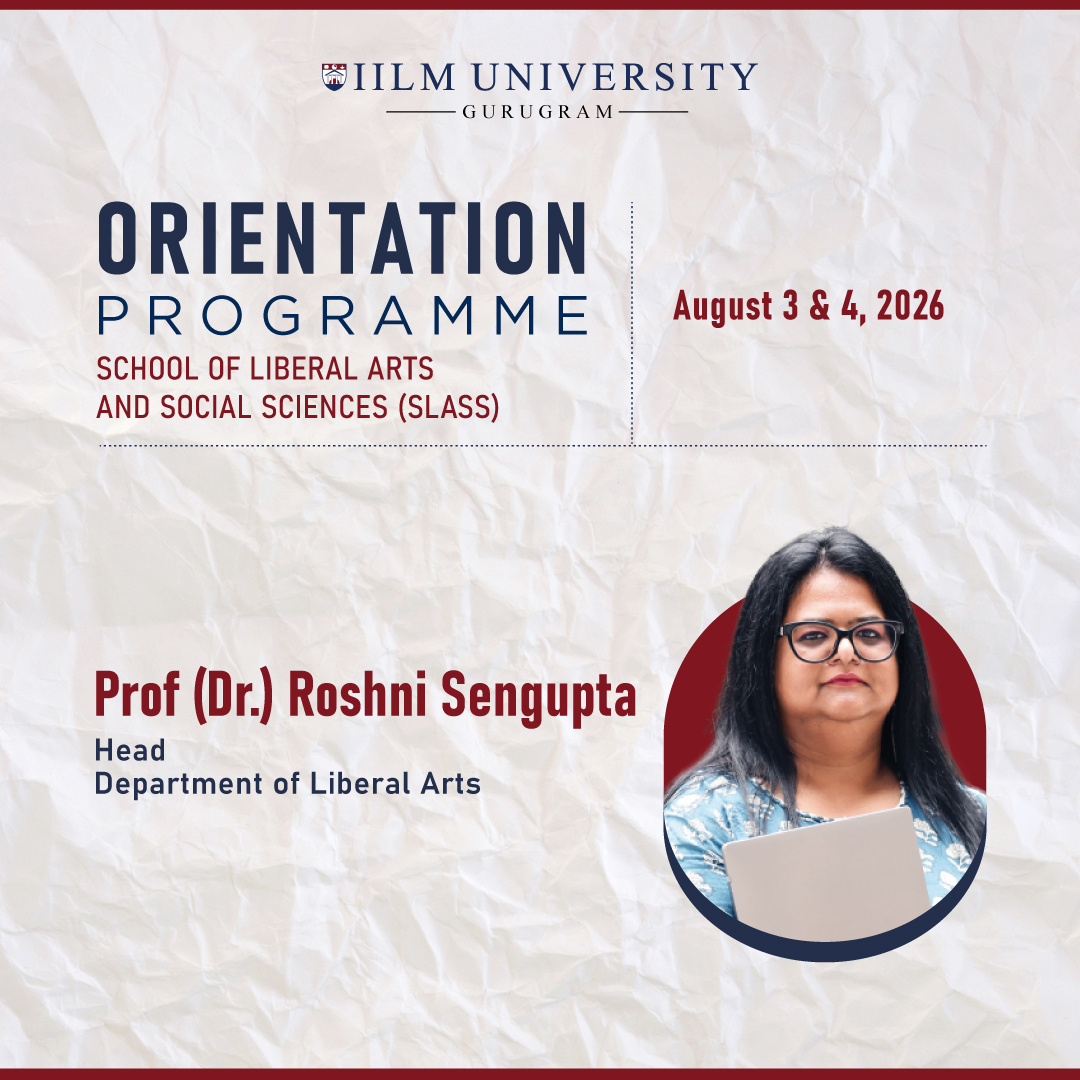
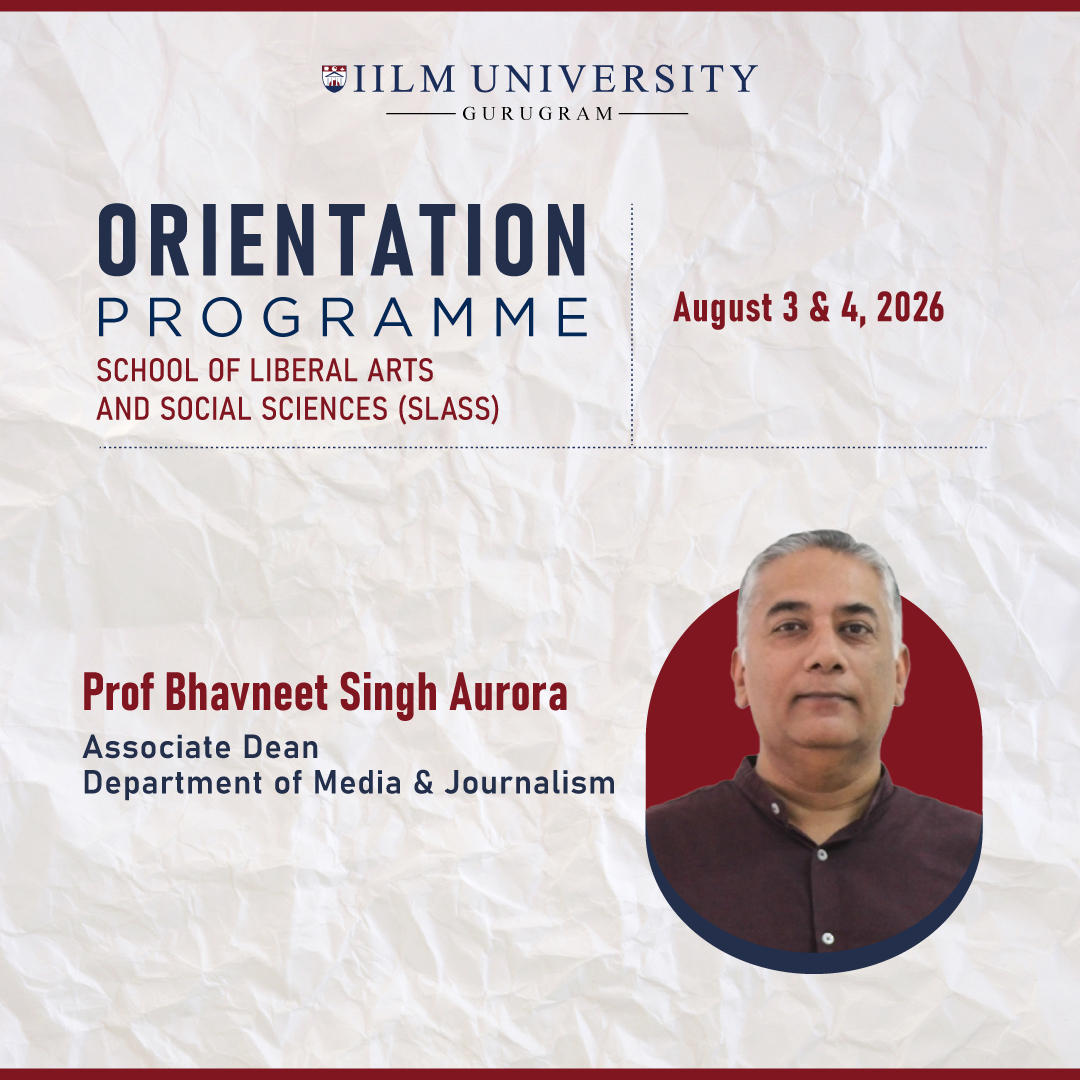
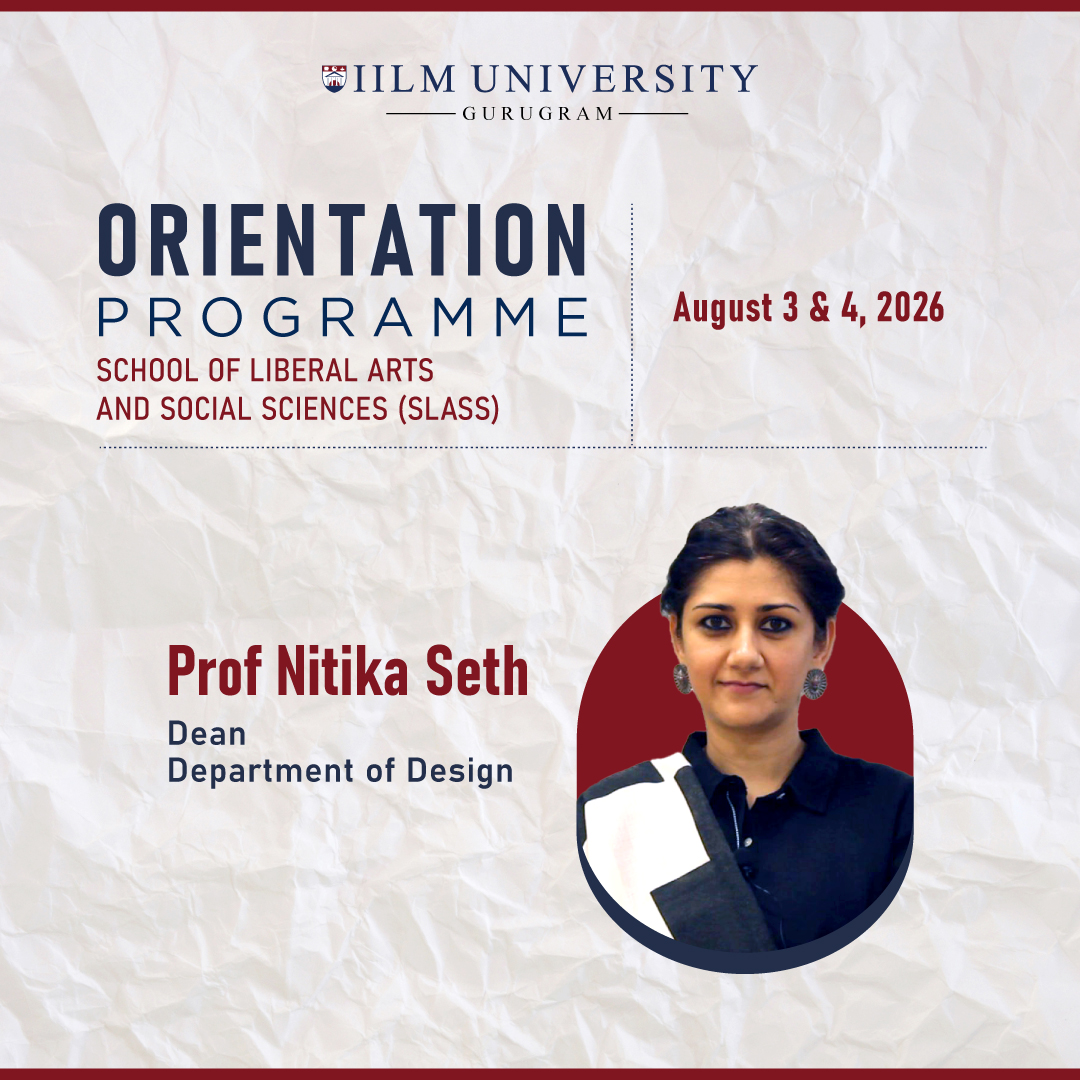
The School of Liberal Arts and Social Sciences (SLASS), IILM University, hosted the Orientation Programme for the incoming Undergraduate Batch 2026–2030 and Postgraduate Batch 2026–2028 on 3rd and 4th August 2026. The programme marked the formal welcome of new students into university life.
The inaugural session opened with ceremonial lamp lighting and Saraswati Vandana, followed by welcome addresses from Dr Ravi Kumar Jain (Officiating Vice Chancellor) and Prof P Dwarakanath (Chancellor, IILM University). Students were briefed on the university’s clubs, examination and progression policy, and given an introduction to the undergraduate courses.
Over the two days, students took part in a series of hands-on activities designed to help them settle into their new environment: a Human Knot team-building exercise, a Magnetic Moments clay workshop by Meraki – The Design Club, a Campus Adventure Hunt across academic and recreational spaces, a Talent Hunt showcasing student performances, and Miracles of Mind, a collaborative art and perception-psychology session by the Department of Psychology. Together, these sessions took students from strangers to a connected first-year cohort within their opening week on campus.
1. Structured, low-stakes challenges — physical, creative, exploratory, and performative — built student confidence and peer bonds faster than a passive orientation talk typically would.
2. Students learned faster through discovery than instruction — exploring campus through a clue-based hunt, or a medium through open-ended clay work, rather than being guided or told.
3. Early opportunities for self-expression — performing, presenting artwork, or working through a team challenge with strangers — gave students repeated, low-risk practice at being seen and heard in their new community.
4. Clubs and departments shaped their sessions around their own subject matter — design thinking, perception psychology — embedding academic identity into the first-week experience rather than treating it as generic icebreaking.
5. The format created small-group bonding within a large-cohort event, whether in teams of a few (Human Knot) or groups of around 70 (Miracles of Mind).