What Makes This Programme Different?

`This advanced programme delves into the frontier of Generative AI, empowering students to develop AI models capable of creating innovative content. With a focus on deep learning, generative adversarial networks, and applications in creative industries, this programme prepares students to lead the next wave of AI-driven innovation.

Pioneering Focus

Specialised curriculum exploring advanced topics like generative adversarial networks and transformer models.

Innovative Applications

Prepares students for careers in creative industries, AI research, and advanced AI-based technologies.

Research Opportunities

Emphasis on cutting-edge research in AI, enabling contributions to transformative innovations.

Why Choose IILM University?

01

Over 30 years of Academic Excellence

Delivering quality education with a legacy of three decades.

02

Global Network of over 16,000 Alumni

A strong, supportive alumni community spread across the globe.

03

International Collaborations

Partnering with renowned global institutions for a holistic education experience.

04

Job Opportunities with over 400 Companies

Connecting students with leading employers for rewarding careers.

05

Centrally Located Green Campuses

Eco-friendly campuses situated in prime, accessible locations.

06

Merit-based Scholarships

Recognising and rewarding academic excellence with financial support.

07

Renowned Faculty from Academia and Industry

Learn from experts with rich academic and industry experience.

08

Vibrant Campus Life

Experience an engaging and dynamic environment both inside and outside the classroom.

09

Internationally Benchmarked Curriculum

A curriculum designed to meet global standards of education and practice.
Specialisations

Major Subjects Description Career Opportunities
Optimization Algorithms This subject focuses on mathematical and computational techniques used to find optimal solutions for complex problems. Students learn optimisation methods used in machine learning models, deep learning training, and large-scale AI systems. AI Engineer, Optimisation Specialist, ML Researcher
Statistics and Exploratory Data Analytics This subject introduces statistical methods and exploration techniques for analysing and understanding data. Students learn data visualization, probability distributions, hypothesis testing, and statistical modeling for data-driven decision-making. Data Scientist, Data Analyst, Business Intelligence Analyst
Applied Machine Learning This course focuses on the practical implementation of machine learning algorithms for real-world applications. Students learn model training, evaluation techniques, feature engineering, and deployment of machine learning solutions. Machine Learning Engineer, AI Developer, Data Scientist
Neural Networks & Deep Learning This subject focuses on advanced neural network architectures and deep learning models used in AI systems. Students study convolutional neural networks, recurrent networks, and transformer-based models for complex data processing. Deep Learning Engineer, AI Researcher, Computer Vision Engineer
MLOps for Generative-AI This course focuses on managing the lifecycle of AI and generative AI models. Students learn model deployment, monitoring, automation pipelines, and scalable AI infrastructure using modern MLOps practices. MLOps Engineer, AI Platform Engineer, ML Infrastructure Engineer
Generative AI This subject focuses on advanced AI models capable of generating text, images, audio, and other content. Students learn transformer architectures, large language models, and generative techniques used in modern AI applications. Generative AI Engineer, AI Research Scientist, NLP Engineer

Frequently Asked Questions

Find answers to common questions about the M.Tech in CSE with Specialisation in Generative AI at IILM University Gurugram.

What is the M.Tech in CSE with Specialisation in Generative AI at IILM Gurugram?

M.Tech in CSE with Specialisation in Generative AI at IILM University Gurugram is a two-year postgraduate engineering programme focused on building and deploying AI systems that can generate text, images, audio, video, and other digital content.

The programme covers deep learning, transformer architectures, large language models, generative adversarial networks, natural language processing, MLOps, and AI ethics. It is delivered by IILM's School of Computer Science & Engineering in collaboration with industry partners to keep the curriculum aligned with evolving industry requirements.

What is Generative AI and why is it worth doing an M.Tech in it?

Generative AI refers to artificial intelligence systems that can produce new content, including text, images, code, music, video, and simulations, rather than only classifying information or making predictions.

Technologies such as ChatGPT, DALL-E, Gemini, Midjourney, and GitHub Copilot are built on generative AI foundations such as transformer models, diffusion models, and large language models. An M.Tech in Generative AI prepares students for emerging AI roles across healthcare, finance, media, gaming, defence, and other technology-driven industries.

What are the eligibility criteria for M.Tech in Generative AI at IILM?

Candidates should have a B.Tech, B.E., MSc, or MCA degree in Computer Science & Engineering, Information Technology, Electronics, or a related engineering discipline from a recognised university.

A valid GATE score is preferred, including GATE CSE, GATE DA for Data Science and Artificial Intelligence, or GATE EC. Candidates without a GATE score may be considered through IILM's entrance test or based on academic merit.

A minimum aggregate of 55% in B.Tech or B.E. is required. Working professionals with a relevant technical degree and AI or machine learning experience may also be considered under the sponsored category.

What is the semester-wise curriculum for M.Tech in Generative AI at IILM?

The M.Tech in Generative AI at IILM Gurugram is structured across four semesters. Semester 1 covers bridge and core subjects, including Optimisation Algorithms, Database Systems, Statistics and Exploratory Data Analytics, Applied Machine Learning, Digital Image Processing, Neural Networks and Deep Learning, and a Bridge Course.

Semester 2 focuses on Computational Linguistics and Natural Language Processing, MLOps for Generative AI, Generative AI, Research Methodology and IPR, and two programme electives.

Semester 3 includes a summer internship or industry capstone project. Semester 4 includes a project or dissertation completed in two phases under faculty guidance.

What job roles are available after M.Tech in Generative AI?

Graduates can pursue roles such as Machine Learning Engineer, Data Scientist, AI Research Scientist, AI/ML Consultant, AI Ethicist, AI Product Manager, NLP Engineer, Computer Vision Engineer, Generative AI Engineer, GenAI Model Architect, GenAI System Developer, AI Solution Architect, AI Strategy Consultant, and GenAI Product Manager.

These roles are available across healthcare, entertainment, media, finance, gaming, advertising, robotics, automation, and other industries adopting AI-powered systems.

Which industries are hiring Generative AI engineers in India?

Generative AI engineers are being hired across technology, banking and financial services, healthcare and pharmaceuticals, media and entertainment, gaming, government, defence, consulting, ecommerce, and India's IT services sector.

Common applications include LLM development, AI product integration, fraud detection, document processing, customer-service automation, medical diagnosis, drug discovery, content generation, personalised streaming, procedural game development, and enterprise AI transformation.

What is the difference between M.Tech in Generative AI and M.Tech in regular CSE or AI/ML?

A general M.Tech in CSE covers a broad range of computing subjects, including algorithms, systems, networks, databases, and selected AI concepts. An M.Tech in AI or Machine Learning focuses on machine learning, deep learning, predictive modelling, and their applications.

M.Tech in Generative AI offers deeper specialisation in technologies that create new content, including transformers, GANs, diffusion models, large language models, multimodal AI, and the MLOps infrastructure required to deploy these systems.

It is particularly suitable for students who want to build, fine-tune, evaluate, or deploy generative AI systems.

Is prior AI or machine learning experience required to apply for M.Tech in Generative AI at IILM?

No, prior professional experience in artificial intelligence or machine learning is not required. The programme includes a Bridge Course in Semester 1 to help students strengthen the mathematical and computational foundations required for advanced AI study.

Students with knowledge of programming, data structures, linear algebra, and basic machine learning will be well prepared. Prior exposure to Python, TensorFlow, or PyTorch can be beneficial, but it is not a mandatory prerequisite.

What research and industry collaboration opportunities are available in this programme?

Students can benefit from industry collaborations involving live projects, internships, and practical problem-solving assignments. They can also access AI and computing laboratories with high-performance workstations and specialised environments for Generative AI research.

The programme includes faculty-led research mentorship, opportunities to contribute to journal publications, and a mandatory Semester 3 industry internship or capstone project. Students interested in pursuing a PhD can also use their research work to strengthen future applications.

What is the admission process for M.Tech in Generative AI at IILM Gurugram?

Candidates must register and apply online through the IILM admissions portal, selecting the M.Tech CSE with Specialisation in Generative AI programme at the Gurugram campus.

Applicants should upload their B.Tech or B.E. degree and marksheets, GATE scorecard if available, and other required documents. Candidates are shortlisted based on their GATE score, academic merit, or performance in IILM's entrance test.

Shortlisted candidates may be invited for a personal interview with the School of Computer Science & Engineering faculty. Successful candidates then receive a provisional admission offer.

Programme Outcomes

Engineering knowledge
Apply the knowledge of mathematics, science, engineering fundamentals, and an engineering specialisation to solve complex engineering problems.
Problem analysis
Identify, formulate, review research literature, and analyse complex engineering problems, reaching substantiated conclusions using first principles of mathematics, natural sciences, and engineering sciences.
Design/development of solutions
Design solutions for complex engineering problems and system components or processes that meet specified needs, with appropriate consideration for public health and safety, and cultural, societal, and environmental factors.
Conduct investigations of complex problems:
Use research-based knowledge and research methods, including the design of experiments, analysis and interpretation of data, and synthesis of information, to provide valid conclusions.
Modern tool usage
Create, select, and apply appropriate techniques, resources, and modern engineering and IT tools, including prediction and modelling, to complex engineering activities, with an understanding of their limitations.
The engineer and society
Apply reasoning informed by contextual knowledge to assess societal, health, safety, legal, and cultural issues, and the consequent responsibilities relevant to professional engineering practice.
Environment and sustainability
Understand the impact of professional engineering solutions in societal and environmental contexts, and demonstrate knowledge of, and the need for, sustainable development.
Ethics
Apply ethical principles and commit to professional ethics, responsibilities, and norms of engineering practice.
Individual and team work
Function effectively as an individual, and as a member or leader in diverse teams and multidisciplinary settings
Communication
Communicate effectively on complex engineering activities with the engineering community and with society at large, including comprehending and writing effective reports and design documentation, delivering presentations, and giving and receiving clear instructions.
Project management and finance
Demonstrate knowledge and understanding of engineering and management principles and apply these to one’s own work, as a member or leader in a team, to manage projects in multidisciplinary environments.
Life-long learning
Recognise the need for, and have the preparation and ability to engage in, independent and life-long learning in the broadest context of technological change.

PROGRAM EDUCATIONAL OBJECTIVES (PEOs)

  • PEO1

    Develop the skills to solve complex computational challenges in Generative AI, using mathematical, scientific, and computational principles effectively.

  • PEO2

    Master problem-solving techniques, algorithm design, and emerging technologies like neural networks and deep learning for crafting solutions in Generative AI.

  • PEO3

    Showcase technical proficiency in Generative AI through interdisciplinary projects, collaborative learning, and engagement with industry professionals.

SEAL YOUR SPOT FOR SUCCESS

Academic Qualifications

  • A Bachelor’s degree or equivalent qualification in the relevant field from a recognised university with a minimum aggregate of 55% marks.
events_bg

Toppers' Speak

"

We were privileged to learn from faculty members hailing from prestigious institutions such as IIM and FMS, alongside some of the finest professors at IILM. This strong academic foundation transformed into invaluable wisdom, shaping the path to where I am today.”
Harbinder Narula Businessworld

1994-96 Healthcare/Wellbeing/Pharma

"

“As a proud gold medallist of my batch, I had the privilege of dedicating over a decade to Deloitte Consulting. My time at IILM was truly transformative, shaping both my career and personal growth. Returning to campus for the alumni meet was a nostalgic and heartwarming experience.”

Shillaza Girdhar Director - Human Resources

2004-06 360 Degree Engineering

"

“My MBA at IILM equipped me with essential business and corporate skills that helped me excel professionally. Case studies, group discussions, and grooming sessions with brilliant peers shaped me into a lifelong learner. Transitioning from a non-finance background to a finance enthusiast was possible due to IILM’s well-designed curriculum. Grateful to call IILM my Alma Mater!”

Anita Ahuja Senior Vice President

MBA 2008-10 Citibank, Singapore

"

“IILM University’s MBA programme was truly transformative. The faculty’s real-world insights made learning highly practical and relevant. Personalised mentoring and career support aligned my goals with industry needs, while the vibrant campus life and networking opportunities enriched the experience. IILM equips you with the skills to thrive in the corporate world.”
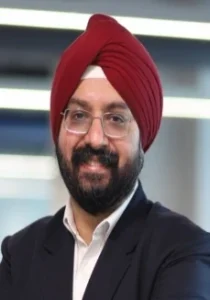
Gurtej Chawla Associate Vice President

MBA 2006-08 Xceedance Consulting