


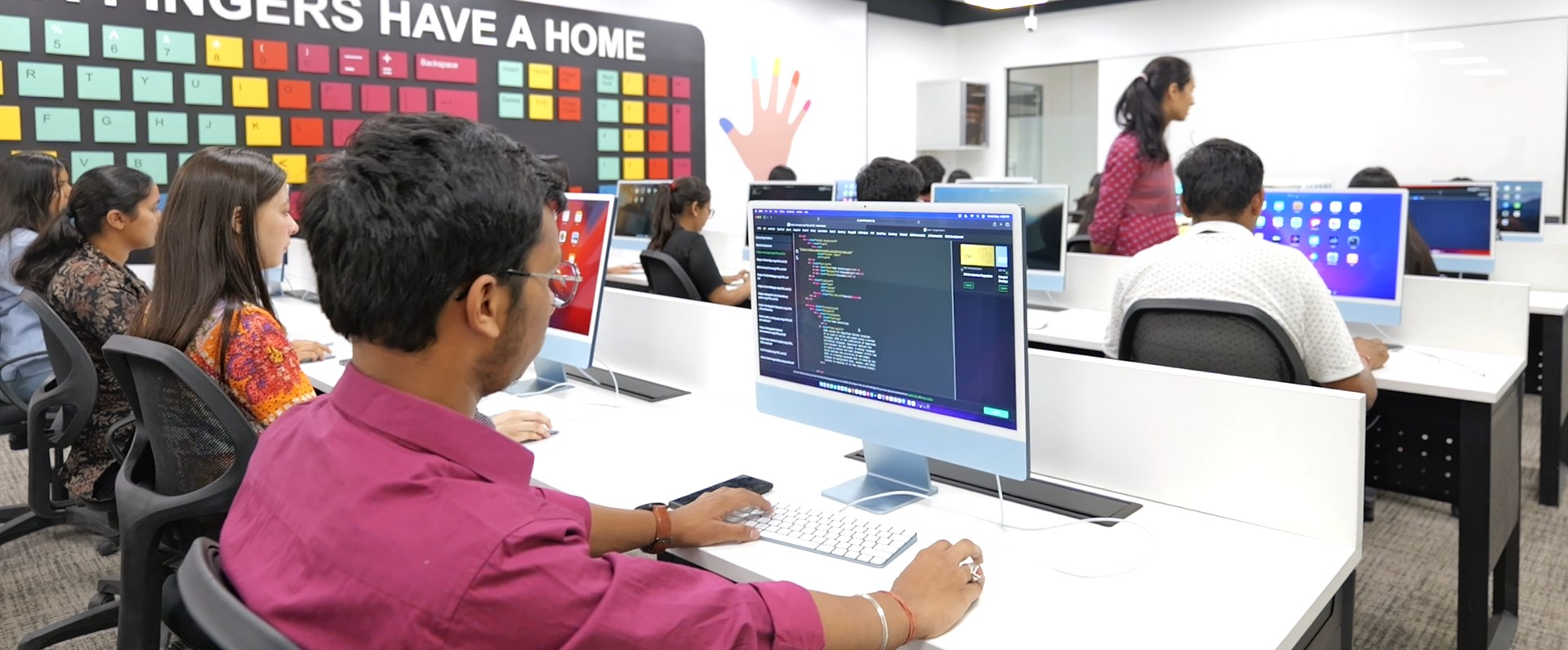
The Web Design and Development programme is designed to equip students with a comprehensive set of skills needed to create dynamic, responsive, and user-friendly web applications. The curriculum covers both front-end and back-end technologies, providing expertise in HTML, CSS, JavaScript, and frameworks such as React and Angular for building interactive and modern websites. Students also delve into back-end development using languages like Node.js and Python, as well as databases such as MySQL and MongoDB, to manage and store data efficiently. A key focus of the programme is responsive design, enabling students to create websites that function seamlessly across various devices and screen sizes. Additionally, the programme emphasises UI/UX principles, teaching students how to design intuitive and visually appealing user interfaces that enhance user experience. Through hands-on projects, students gain the ability to integrate design and functionality, preparing them to develop engaging, scalable web applications that meet the needs of diverse users and industries.
BCA (Hons) with Specialisation is a Bachelor of Computer Applications program where students receive a comprehensive education in computer science, programming, and IT systems, along with an in-depth focus on a specific area or technology. The specialisation options may include areas like software development, networking, cybersecurity, data science, artificial intelligence, or cloud computing.
Graduates can pursue a variety of roles depending on their chosen specialisation. Some career options include:
– Software Developer/Engineer
– Data Analyst/Scientist
– Cybersecurity Expert
– Cloud Solutions Architect
– Network Administrator
– AI/Machine Learning Engineer
– App Developer
– Web Developer
The specialisation helps students stand out in the job market, making them more attractive to employers looking for specific skill sets.
BCA (Hons) offers more depth in both theory and practical learning compared to a regular BCA program. The honours degree typically includes a stronger focus on research, project work, and advanced topics in computer science. The specialisation allows students to gain expertise in a particular area, whereas a regular BCA might offer a broader but less detailed approach to IT and computer science.
While a technical background in subjects like mathematics and computer science can be helpful, it is not mandatory to pursue a BCA (Hons). Many institutions accept students from various academic backgrounds (arts, commerce, etc.), as long as they meet the program’s entry requirements. The program is designed to provide foundational knowledge in computing and programming, so students from diverse fields can succeed with the right mindset and effort.

Delivering quality education with a legacy of three decades.

A strong, supportive alumni community spread across the globe.

Partnering with renowned global institutions for a holistic education experience.

Connecting students with leading employers for rewarding careers.

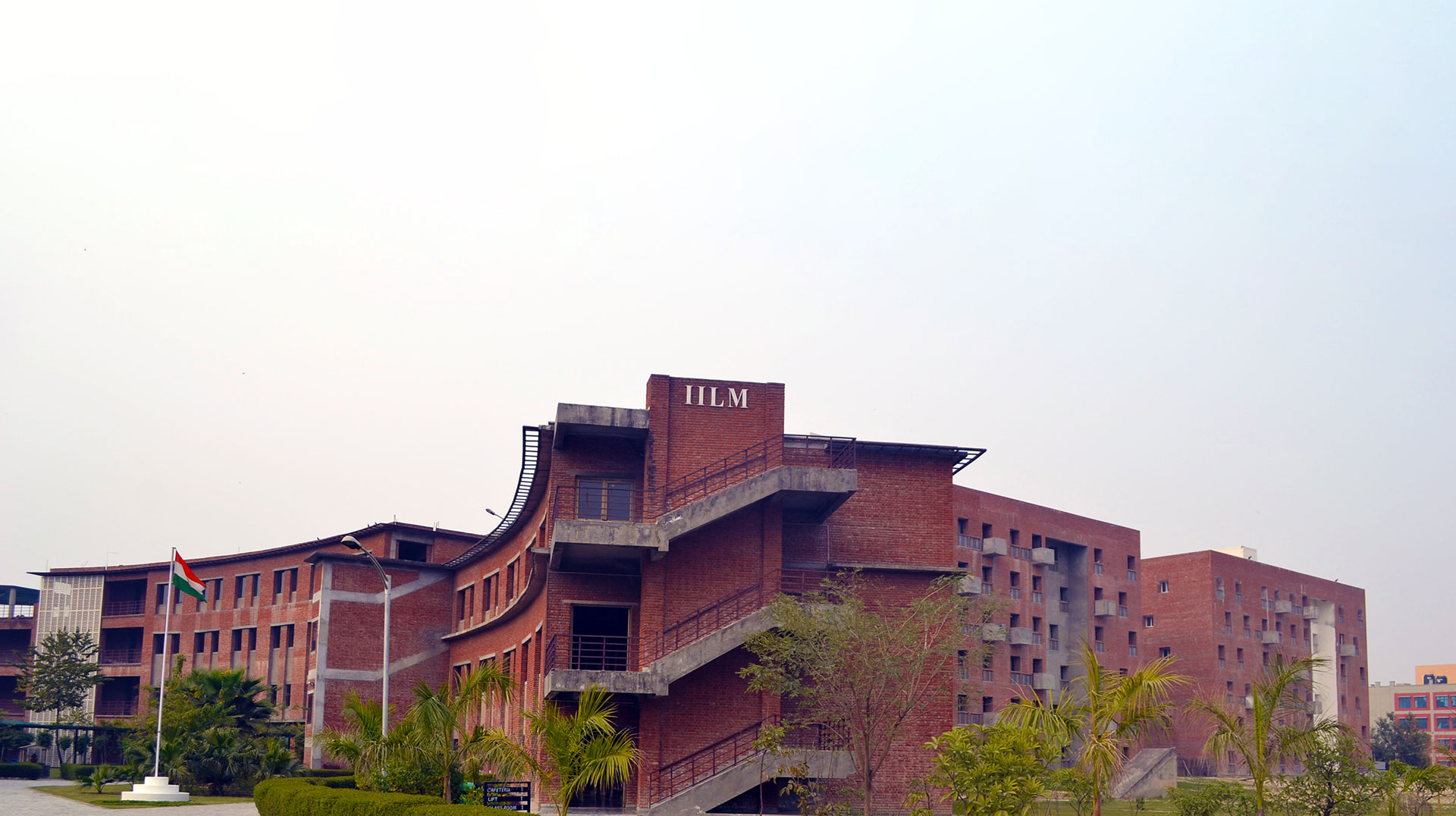
Eco-friendly campuses situated in prime, accessible locations.

Recognising and rewarding academic excellence with financial support.

Learn from experts with rich academic and industry experience.

Experience an engaging and dynamic environment both inside and outside the classroom.

A curriculum designed to meet global standards of education and practice.

Provide students with a robust foundation in computer applications and specialised domains to solve real-world technological challenges.
Encourage innovative thinking to develop cutting-edge solutions in AI-ML, web development, and other advanced technologies.
Enable hands-on learning to design, develop, and optimise software applications, ensuring industry readiness.
Equip students with the knowledge and skills to excel in various roles across tech industries or pursue higher education.
Candidates must have passed the qualifying examination with a minimum of 50% marks (45% for SC/ST/Reserved candidates) in aggregate.
Training
The School focuses on holistic student development through technical training and soft skills enhancement. Expert guidance is provided for career planning, aptitude building, and placement preparation, including GDs, PIs, and mock interviews.
Internships
Internships integrated into the NEP-compliant curriculum offer industry exposure, fostering professional growth, character development, and real-world readiness.
Placements
A dedicated Placement Cell connects students with top career opportunities, ensuring they stay updated with industry trends and succeed in their professional journey.
NEP-Compliant Framework: Designed as per National Education Policy guidelines, ensuring academic excellence and holistic development.
Core Competency: Focus on essential skills in computer science to prepare students for industry demands.
Interdisciplinary Learning: Combines computer science with fields like AI, Cybersecurity, Blockchain, Cloud Computing, and IoT.
Flexible Curriculum: Choice-based learning allows students to select courses based on their interests and career goals.
Practical Learning: Includes projects, internships, and hands-on activities to develop critical thinking and problem-solving skills.
Research Opportunities: Encourages innovation and contributions to advancements in technology.
Industry Collaboration: Partnerships with leading companies provide real-world exposure and training.
Discover the exciting and in-demand career opportunities available to IILM Computer Science graduates:
Software Developer/Engineer: Design, develop, and maintain software applications, excelling in front-end, back-end, or full-stack development.
Web Developer: Create innovative websites and web applications, specialising in front-end, back-end, or cross-platform development.
Database Administrator (DBA): Manage, optimise, and secure organisational databases, ensuring efficient data handling.
Network Engineer/Administrator: Build and maintain robust networks with a focus on security, troubleshooting, and performance optimisation.
Cybersecurity Analyst: Safeguard systems and networks by monitoring threats, implementing security measures, and mitigating risks.
Data Scientist: Extract meaningful insights from complex datasets using machine learning and data analysis, driving business decisions.
AI Engineer: Develop cutting-edge AI systems leveraging machine learning, computer vision, and natural language processing.
Cloud Architect: Design and manage scalable cloud infrastructure on platforms like AWS, Microsoft Azure, and Google Cloud.
Mobile App Developer: Develop innovative applications for iOS, Android, or cross-platform devices, enhancing user engagement.

My MBA at IILM equipped me with essential business and corporate skills that helped me excel professionally. Case studies, group discussions, and grooming sessions with brilliant peers shaped me into a lifelong learner. Transitioning from a non-finance background to a finance enthusiast was possible due to IILM’s well-designed curriculum. Grateful to call IILM my Alma Mater!”

As a proud gold medallist of my batch, I had the privilege of dedicating over a decade to Deloitte Consulting. My time at IILM was truly transformative, shaping both my career and personal growth. Returning to campus for the alumni meet was a nostalgic and heartwarming experience.”

My MBA at IILM equipped me with essential business and corporate skills that helped me excel professionally. Case studies, group discussions, and grooming sessions with brilliant peers shaped me into a lifelong learner. Transitioning from a non-finance background to a finance enthusiast was possible due to IILM’s well-designed curriculum. Grateful to call IILM my Alma Mater!”