
Program Outcome (PO’s)

  • PO1
    Engineering Knowledge: Apply knowledge of mathematics, natural science, computing, engineering fundamentals and an engineering specialization as specified in WK1 to WK4 respectively to develop to the solution of complex engineering problems.
  • PO2
    Problem Analysis: Identify, formulate, review research literature and analyze complex engineering problems reaching substantiated conclusions with consideration for sustainable development. (WK1 to WK4).
  • PO3
    Design/Development of Solutions: Design creative solutions for complex engineering problems and design/develop systems/components/processes to meet identified needs with consideration for the public health and safety, whole-life cost, net zero carbon, culture, society and environment as required. (WK5)
  • PO4
    Conduct Investigations of Complex Problems: Conduct investigations of complex engineering problems using research-based knowledge including design of experiments, modelling, analysis & interpretation of data to provide valid conclusions. (WK8)
  • PO5
    Engineering Tool Usage: Create, select and apply appropriate techniques, resources and modern engineering & IT tools, including prediction and modelling recognizing their limitations to solve complex engineering problems. (WK2 and WK6)
  • PO6
    The Engineer and The World: Analyze and evaluate societal and environmental aspects while solving complex engineering problems for its impact on sustainability with reference to economy, health, safety, legal framework, culture and environment. (WK1, WK5, and WK7)
  • PO7
    Ethics: Apply ethical principles and commit to professional ethics, human values, diversity and inclusion; adhere to national & international laws. (WK9)
  • PO8
    Individual and Collaborative Team work: Function effectively as an individual, and as a member or leader in diverse/multi-disciplinary teams.
  • PO9
    Communication: Communicate effectively and inclusively within the engineering community and society at large, such as being able to comprehend and write effective reports and design documentation, make effective presentations considering cultural, language, and learning differences.
  • PO10
    Project Management and Finance: Apply knowledge and understanding of engineering management principles and economic decision-making and apply these to one’s own work, as a member and leader in a team, and to manage projects and in multidisciplinary environments.
  • PO11
    Life-Long Learning: Recognize the need for, and have the preparation and ability for i) independent and life-long learning ii) adaptability to new and emerging technologies and iii) critical thinking in the broadest context of technological change.

Program Educational Objectives (PEOs)

PEO1
Graduates will emerge as ethically responsible and future-ready mechanical engineering professionals with strong theoretical knowledge and practical competence to contribute effectively in industry, higher education, and sustainable engineering practices. (Links to Vision, M1)
PEO2:
Graduates will demonstrate the ability to innovate, conduct multidisciplinary research, and develop impactful engineering solutions in emerging areas such as automation, robotics, electric mobility, additive manufacturing, drone technology, and smart mechanical systems. (Links to Vision, M3)
PEO3:
Graduates will excel in diverse industrial, academic, and entrepreneurial environments by applying experiential learning, teamwork, leadership, and problem-solving skills to address real-world engineering challenges. (Links to M4)
PEO4:
Graduates will utilize modern laboratories, digital tools, Industry 4.0 practices, and advanced engineering techniques to design, analyze, manufacture, test, and deploy sustainable and stakeholder-driven mechanical engineering solutions. (Links to M2)

Programmes Offered

Undergraduate


B. Tech Mechanical Engineering

Eligibility Criteria

B. Tech (Hons) Mechanical Engineering

Eligibility Criteria

Doctorate


Ph. D in Mechanical Engineering

Eligibility Criteria

Programme Specific Outcomes (PSOs)

PSO1:

Students will be able to apply the principles of mechanical engineering for the analysis, design, manufacturing, and performance evaluation of mechanical systems, components, and processes.

PSO2:

Students will be able to utilize modern engineering tools and emerging technologies such as simulation, automation, robotics, electric vehicles, drone technology, additive manufacturing, and smart manufacturing for innovative, efficient, and sustainable engineering solutions.
events_bg

Toppers' Speak

"

My MBA at IILM equipped me with essential business and corporate skills that helped me excel professionally. Case studies, group discussions, and grooming sessions with brilliant peers shaped me into a lifelong learner. Transitioning from a non-finance background to a finance enthusiast was possible due to IILM’s well-designed curriculum. Grateful to call IILM my Alma Mater!”

Anita Ahuja Senior Vice President

MBA 2008-10 Citibank, Singapore

"

As a proud gold medallist of my batch, I had the privilege of dedicating over a decade to Deloitte Consulting. My time at IILM was truly transformative, shaping both my career and personal growth. Returning to campus for the alumni meet was a nostalgic and heartwarming experience.”
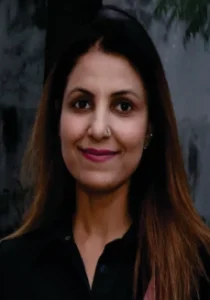
Shillaza Girdhar Director - Human Resources

2004-06 Engineering & Consulting Services

"

My MBA at IILM equipped me with essential business and corporate skills that helped me excel professionally. Case studies, group discussions, and grooming sessions with brilliant peers shaped me into a lifelong learner. Transitioning from a non-finance background to a finance enthusiast was possible due to IILM’s well-designed curriculum. Grateful to call IILM my Alma Mater!”
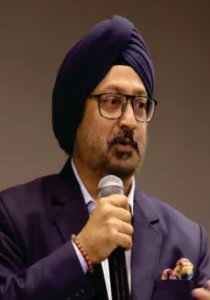
Harbinder Narula Businessworld

1994-96 Healthcare/Wellbeing